Gloria De Piero: The Powerful Journey From Political Broadcaster to Labor MP and Back to Television
From Political Journalism to Parliament and Back to Broadcasting, Gloria De Piero's Career Reflects a Distinctive Journey Through British Public Life

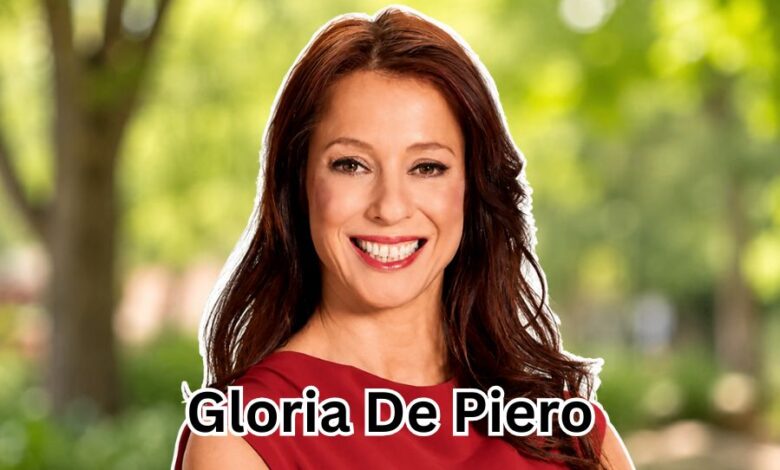
Gloria De Piero has built an unusual career that bridges two demanding areas of British public life: political journalism and frontline politics. Born in Bradford on 21 December 1972, she first became widely recognized as a television journalist, developing a reputation for interviewing politicians and explaining Westminster affairs to a broad audience. She later made the significant transition from reporting on politics to participating directly in it, becoming the Labour Member of Parliament for Ashfield in Nottinghamshire in 2010.
Her nine years in the House of Commons included several Labor frontbench positions and roles under different party leaders during a period of considerable political change. After deciding not to contest another general election in 2019, De Piero returned to broadcasting, bringing with her the unusual perspective of someone who had experienced political journalism and parliamentary life from the inside. Her career therefore offers an interesting example of how media, politics and public communication can overlap.
Quick Bio
| Field | Details |
|---|---|
| Full Name | Gloria De Piero |
| Date of Birth | 21 December 1972 |
| Birthplace | Bradford, West Yorkshire, England |
| Nationality | British |
| Profession | Broadcaster, Journalist, Former Politician |
| Political Party | Labour Party |
| Former Constituency | Ashfield, Nottinghamshire |
| MP Tenure | 2010–2019 |
| Known For | Political broadcasting, Labour politics, parliamentary career |
| Broadcasting Career | BBC, ITV/GMTV, Times Radio, GB News |
| Former Role | Political Editor of GMTV |
| Current Field | Broadcasting and Political Commentary |
Gloria De Piero’s Early Life and Background
Gloria De Piero was born and raised in Bradford, West Yorkshire, in a family with Italian roots. Her parents had moved to Britain from Italy and worked in Bradford’s textile industry. Growing up in a working-class environment gave De Piero direct experience with some of the social and economic issues that would later become important in both her journalism and political career.
Education played an important role in her development. She attended school in Bradford before continuing her studies at Bradford College. Her interest in politics was already becoming visible during her student years, when she became involved in student representation and political activity. She later studied sociology, a subject closely connected to questions about communities, inequality, institutions and social behavior.
That academic background suited the direction her career eventually took. De Piero became interested not simply in political parties and elections but also in why ordinary people think about politics in the ways they do. That theme would appear repeatedly throughout her time as a journalist and MP.
Her early experiences also gave her a perspective different from that of politicians who had followed a more traditional route through elite universities, political research positions and Westminster offices. Before entering Parliament, she had already spent years communicating political developments to viewers outside Westminster.
Building a Career in Political Broadcasting
Long before Gloria De Piero became an MP, she had established herself in British political journalism. Her early broadcasting career included work as a researcher on ITV’s Jonathan Dimbleby program, followed by experience at the BBC, where she worked on the political program On the Record.
These positions allowed her to develop an understanding of how government, opposition parties and Parliament operated while also learning the practical skills required in television journalism. Political broadcasting demands more than knowledge of policy. Journalists must be able to question senior figures, identify the significance of rapidly changing events and translate complex political arguments into language that viewers can understand.
De Piero’s career took an important step forward when she became political editor of GMTV in 2003. She remained in the position until 2010, covering Westminster politics for a major national breakfast television audience.
As political editor, she interviewed politicians and reported on the major issues affecting British government and public life. The role gave her extensive exposure to senior political figures and provided a close view of the relationship between politicians, journalists and voters.
From Reporting on Westminster to Entering It
By 2010, Gloria De Piero had spent years asking politicians questions from the other side of the camera. She then made the major decision to leave political journalism and seek election herself.
She stepped down from her role at GMTV and pursued the Labour nomination for Ashfield, a Nottinghamshire constituency previously represented by senior Labour politician Geoff Hoon. She was selected as Labor’s candidate ahead of the 2010 general election.
The transition was significant. Journalists normally observe, analyze and challenge political decisions, whereas elected politicians must make choices, defend positions and remain accountable to constituents. De Piero suddenly moved from interviewing MPs to experiencing those pressures personally.
Gloria De Piero as MP for Ashfield
Gloria De Piero was elected Member of Parliament for Ashfield on 6 May 2010. Her first victory was extremely narrow, with a majority of just 192 votes, demonstrating how competitive the constituency had become.
She nevertheless strengthened her electoral position during the following general election. In 2015, she retained Ashfield with a substantially larger majority. At the 2017 general election, however, the contest again became extremely close, with De Piero retaining the constituency by only 441 votes.
Representing Ashfield placed her at the center of political debates concerning communities that had traditionally supported Labor but were undergoing major political and economic changes. Former industrial and working-class areas became increasingly important to discussions about Labor’s electoral direction during the 2010s.
De Piero’s experience as an MP therefore involved more than parliamentary debates in Westminster. Like other constituency MPs, she had to balance national political responsibilities with the everyday concerns of residents.
A Growing Role on Labor’s Front Bench
De Piero’s progression within Labor was relatively quick after entering Parliament. In October 2010, Labor leader Ed Miliband appointed her to the opposition front bench as a shadow minister covering culture, media and sport.
She subsequently moved into a Home Office role, where her responsibilities included crime prevention. In 2013, her political profile grew further when she became Shadow Minister for Women and Equalities, a position that placed her within Labour’s shadow cabinet structure.
Her portfolio focused on equality, representation, and opportunities for women. These were subjects that aligned with her wider interest in political participation and the relationship between institutions and the public.
Following the change in Labor leadership in 2015, De Piero served as Shadow Minister for Young People and Voter Registration under Jeremy Corbyn. She left that role in 2016 but later returned to Labor’s front bench in 2017 as a Shadow Justice Minister, remaining there until July 2019.
Across these appointments, De Piero worked under different Labor leadership teams at a time when the party itself was experiencing considerable internal debate about its future direction.
Understanding Why Voters Distrust Politics
One particularly interesting aspect of Gloria De Piero’s political career was her focus on the relationship between politicians and voters.
In 2012, she undertook a project commonly known as “Why Do People Hate Me?”, traveling around the country and speaking with groups of people about their frustration and dissatisfaction with politicians. The deliberately provocative question reflected a broader concern: why had public trust in political institutions and elected representatives become so weak?
This subject was particularly relevant to De Piero because she had experienced politics from both sides. As a journalist, she had questioned politicians about their decisions. As an MP, she could now hear directly how voters viewed the political system and the people working within it.
The exercise demonstrated one of the recurring themes in her career: communication between Westminster and ordinary voters. Rather than treating political disengagement simply as a problem of voters failing to participate, the project considered why people might feel politicians were failing to understand them.
Brexit and a Changing Political Landscape
The Brexit period presented particularly difficult challenges for MPs representing constituencies where local opinion differed from their own position.
De Piero supported the United Kingdom remaining in the European Union during the 2016 referendum, while Ashfield recorded strong support for leaving. That contrast reflected the wider difficulties Labour faced in communities where many traditional supporters backed Brexit.
The years that followed were dominated by debates about how the referendum result should be implemented. For MPs such as De Piero, those arguments were closely connected with questions about representation: whether MPs should primarily follow their own judgment, party policy or the preferences expressed by their constituents.
Her experience during this period illustrates the broader political transformation underway across parts of England, particularly in constituencies with strong historical ties to Labor.
Why Gloria De Piero Left Parliament
In July 2019, De Piero resigned from Labor’s front bench and announced that she would not stand at the next general election.
Her departure came after almost a decade in Parliament. She had experienced three general elections as an Ashfield candidate, several opposition frontbench positions, major internal changes within Labor and the political disruption surrounding Brexit.
When the 2019 general election arrived, she did not seek re-election, bringing her parliamentary career to an end. She officially left the House of Commons after serving as Ashfield’s MP from 2010 until 2019.
Although leaving Parliament ended one chapter of her professional life, it did not end her involvement in British politics.
Gloria De Piero Returns to Broadcasting
After stepping away from elected politics, De Piero returned to the profession where she had originally established her public profile.
In 2020, she joined Times Radio as a presenter, marking her return to political broadcasting after approximately a decade inside Parliament. Her experience as a former MP gave her broadcasting career a different dimension. She was no longer simply a journalist who had observed Westminster; she understood directly how constituency politics, party discipline, elections and parliamentary responsibilities operate.
In 2021, Gloria De Piero joined GB News, where she became part of the channel’s political programming. Her work has included political discussion, interviews and programmes examining current affairs and the people shaping British public life.
Her return to television essentially completed a professional circle: journalist, MP and then broadcaster again.
What Makes Her Career Distinctive?
The most distinctive feature of De Piero’s career is the combination of significant experience on both sides of British political communication.
Many journalists spend decades analyzing politicians without seeking elected office, while many MPs have never worked as national political broadcasters. De Piero has done both.
That combination means her professional story cannot be understood purely as a political biography or purely as a broadcasting career. The two areas are closely connected. Her journalism prepared her for political communication, while her years in Parliament later gave her firsthand knowledge that could inform her work as a broadcaster.
Conclusion
Gloria De Piero has followed a distinctive path through British public life, moving from a Bradford upbringing into political journalism, becoming GMTV’s political editor, entering Parliament as the Labour MP for Ashfield, serving in several opposition frontbench positions and eventually returning to broadcasting.
Her parliamentary career from 2010 to 2019 placed her at the centre of some of Britain’s most significant political debates, including changing voter attitudes, Labour’s internal transformation and Brexit. Her later return to television allowed her to approach political broadcasting with the additional perspective of someone who had personally experienced elections, constituency representation and Westminster politics.
Rather than belonging exclusively to either journalism or politics, Gloria De Piero’s career connects the two. That combination remains the defining feature of her public profile and explains why she continues to be a recognizable voice in conversations about British politics, the media and public life.
(FAQs)
1. Who is Gloria De Piero?
Gloria De Piero is a British broadcaster and former Labour Party politician who represented Ashfield in Parliament from 2010 to 2019.
2. When was Gloria De Piero born?
Gloria De Piero was born on 21 December 1972 in Bradford, West Yorkshire, England.
3. Which constituency did Gloria De Piero represent?
She represented Ashfield in Nottinghamshire as a Labour Member of Parliament between 2010 and 2019.
4. What television programs has Gloria De Piero worked on?
De Piero worked in political broadcasting for organizations including GMTV, and later returned to broadcasting with Times Radio and GB News.
5. Why did Gloria De Piero leave Parliament?
Gloria De Piero announced in 2019 that she would not stand for re-election, bringing her nine-year career as an MP to an end.