Tom Swarbrick: How He Became One of Britain’s Most Influential Political Broadcasters
From award-winning journalism to Downing Street and LBC drivetime, Tom Swarbrick has built a distinctive career at the heart of British political broadcasting.

Introduction
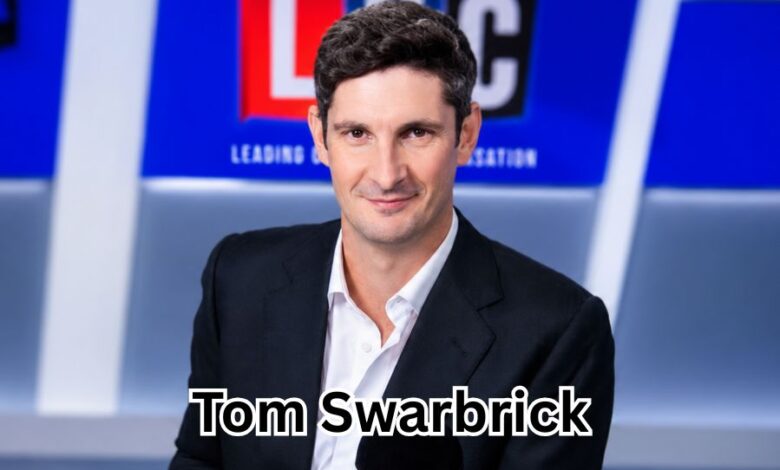
Tom Swarbrick’s career is shaped by one central advantage: he has worked both as a journalist and inside government. Best known today as the presenter of LBC’s weekday drivetime programme, he brings to the microphone experience that reaches far beyond the radio studio. Before becoming one of the station’s most recognisable political voices, he worked as a reporter, covered major national and international events, and later served inside 10 Downing Street as Head of Broadcast during Theresa May’s premiership. That combination of newsroom discipline and first-hand knowledge of government communication has helped make his broadcasting style analytical, direct and focused on how political decisions affect ordinary people.
Quick Bio
| Field | Details |
|---|---|
| Full Name | Tom Swarbrick |
| Profession | Radio presenter, journalist and political commentator |
| Nationality | British |
| Education | University of Cambridge |
| Known For | Presenting Tom Swarbrick at Drive on LBC |
| Current Programme | Tom Swarbrick at Drive |
| Broadcast Time | Weekdays, 4 pm to 6 pm |
| Former Government Role | Head of Broadcast at 10 Downing Street |
| Government Service | 2016–2018 |
| Notable Award | National Radio Journalist of the Year, 2014 |
| Main Coverage Areas | British politics, current affairs and public policy |
| Employer | LBC Radio |
Who Is Tom Swarbrick?
Tom Swarbrick is an English broadcaster, journalist and former government communications adviser. He currently presents Tom Swarbrick at Drive, LBC’s late-afternoon weekday programme, which airs from 4 pm to 6 pm. The show occupies an important part of the daily news cycle, arriving after developments in Parliament, government departments, courts and international affairs have begun to take shape. This gives Swarbrick the task of explaining what has happened, questioning the people involved and opening the discussion to listeners travelling home or following the news at the end of the working day.
Unlike presenters whose careers have remained entirely within broadcasting, Swarbrick has worked on both sides of the political-media relationship. He has questioned public officials as a journalist, helped manage broadcast communication from within government and then returned to the role of interviewer. That background gives him a detailed understanding of how political messages are prepared, defended and challenged, and it is central to why his work stands out.
Tom Swarbrick’s Early Broadcasting Career
Swarbrick studied theology at the University of Cambridge before beginning his professional career in radio. He entered broadcasting through local radio, working with the BBC before moving to LBC in 2012. The early stages of a radio career usually involve far more than appearing behind a microphone. Reporters must research stories quickly, verify details, secure interviews, write scripts, understand audio production, and respond calmly when events change. This grounding gave Swarbrick practical newsroom experience before he became a regular presenter.
Building His Reputation at LBC
At LBC, Swarbrick progressed from a junior reporting role to become a prominent journalist and Chief Correspondent. The station’s format required him to cover politics while also understanding the concerns driving public conversation. LBC is built around direct interaction: callers challenge presenters, experts respond in real time, and stories can develop during a single programme. For a journalist, this environment demands speed, accuracy and the ability to ask concise questions without losing control of a complicated discussion.
His reporting work earned significant industry recognition. In 2014, he was named National Radio Journalist of the Year at the Radio Academy Awards. The award marked him out as more than an emerging presenter; it recognised the strength of his journalism at a national level. By this stage, Swarbrick had demonstrated that he could report serious stories, communicate clearly and hold listeners’ attention while maintaining the discipline expected of news broadcasting.
From LBC Journalist to Downing Street Adviser
A major turning point came in 2016, when Tom Swarbrick left LBC to become Head of Broadcast at 10 Downing Street. He joined Theresa May’s senior communications operation, placing him at the centre of government during an exceptionally demanding political period. The role involved helping coordinate the Prime Minister’s relationship with television and radio outlets, preparing for interviews and ensuring that government messages could be communicated under intense public and media scrutiny.
This was not a ceremonial position. Broadcast communication is one of the most sensitive areas of modern government because live interviews can alter the direction of a political story within minutes. A senior adviser must understand the policy being discussed, anticipate difficult questions, assess how an answer may be interpreted, and respond when events move faster than planned. Swarbrick’s journalism background was valuable because he already understood how reporters construct questions and where weaknesses in an argument are likely to be identified.
Working Through a Historic Political Period
Swarbrick’s time in Downing Street coincided with the early years of the Brexit process, including the triggering of Article 50, the 2017 general election and the opening stages of negotiations over Britain’s departure from the European Union. It also covered a period of rapidly changing international politics following Donald Trump’s election as president of the United States. These events created constant pressure on the government’s communication team, as domestic policy, party politics and international diplomacy repeatedly overlapped.
The experience gave Swarbrick insight into the difference between political decisions and the way those decisions are presented publicly. Government communication is not simply about choosing persuasive words; it involves timing, credibility, preparation and the ability to withstand detailed questioning. When he later returned to journalism, he brought with him a stronger understanding of the machinery behind public appearances, and that perspective became one of the defining features of his broadcasting identity.
Why Tom Swarbrick Returned to Radio
Swarbrick left Downing Street in 2018 and returned to LBC. His return to broadcasting was important because it allowed him to apply his government experience in an independent journalistic role. Rather than remaining a political strategist, he resumed questioning decision-makers and interpreting events for a broad audience. He presented programmes including a late-night weekday show and the political programme Swarbrick on Sunday, both of which gave him space to develop a recognisable style combining detailed analysis with direct listener participation.
Tom Swarbrick at Drive on LBC
In 2022, Swarbrick was selected to present LBC’s drivetime programme, taking over a major weekday slot. Tom Swarbrick at Drive airs Monday to Friday from 4 pm to 6 pm, placing him on air when many of the day’s biggest stories are reaching a critical stage. Parliamentary announcements may have just been made, markets may be reacting to economic news, and government departments may be defending decisions made earlier in the day. The programme must therefore be immediate enough to respond to breaking developments while still giving listeners a clear explanation of their significance.
Drivetime also attracts a broad audience. Some listeners follow politics closely, while others encounter the story for the first time during the programme. Swarbrick has to make the discussion accessible without oversimplifying it. He frequently begins with the central question behind a story, tests the official explanation and then invites callers to add experience, disagreement or criticism. This structure gives the programme energy while keeping it connected to a recognisable news agenda.
His Interviewing and Debate Style
Swarbrick’s broadcasting style is usually measured, but it is not passive. He often allows guests or callers enough time to explain their position before identifying a contradiction or pressing them on a missing detail. The technique can produce more revealing exchanges than immediate confrontation because the argument is heard fully before being challenged. His experience in political communications also helps him recognise when an answer has been carefully prepared to avoid the central issue.
At the same time, live phone-in radio requires balance. A presenter must challenge misinformation, uphold legal and editorial standards, and prevent a forceful caller from unfairly dominating the programme. Swarbrick’s approach generally combines patience with firm intervention. He treats disagreement as part of the format rather than as a failure of the conversation, which is important in an era when political debate is often reduced to slogans, personal attacks or short social-media clips.
The Importance of His Government Experience
Swarbrick’s period in Downing Street remains central to public interest in his career because it distinguishes him from many other broadcasters. He knows how interview preparation works, how communications teams respond to crises and why politicians sometimes repeat a limited set of phrases. This does not mean that he automatically knows the motive behind every government statement, but it gives him a practical framework for examining such statements more closely.
That knowledge is particularly useful during elections, leadership contests, policy reversals and public scandals. Political communication often depends on controlling the sequence of information: what is announced, when it is announced and which minister is sent out to defend it. Swarbrick can explain these patterns to listeners while still focusing on the substance of the issue. His analysis is therefore not simply about political performance; it asks whether the underlying decision is workable, fair and properly understood.
A Broad Role in Modern British Media
Although radio remains his main platform, Swarbrick has also appeared as a political commentator and media contributor beyond LBC. His wider work reflects the increasingly connected nature of modern broadcasting, in which radio discussions may be shared as video, debated on television and circulated through digital platforms within minutes. His professional identity combines reporter, interviewer, analyst, and public moderator, rather than fitting neatly into a single traditional broadcasting category.
Why Audiences Continue to Follow Tom Swarbrick
Public interest in Tom Swarbrick is connected to more than his job title. Listeners are drawn to presenters who can make sense of political events without pretending that every issue has a simple answer. His programmes often address the gap between policy language and everyday reality, asking how decisions on taxation, healthcare, migration, education, energy or foreign affairs will affect the public. The caller-led format also allows people outside Westminster to challenge assumptions made by politicians and commentators.
His career carries additional credibility because he has experienced the pressures faced by both journalists and political advisers. He understands why reporters demand clear answers, but he also knows how difficult it can be for governments to communicate during a crisis. This dual perspective does not remove the need for scrutiny. Instead, it can make the scrutiny more precise, because he is familiar with the professional methods used on each side.
Conclusion
Tom Swarbrick has developed into a significant figure in British political broadcasting through a career that combines award-winning journalism, senior government communications experience and live radio presentation. His early work at the BBC and LBC established his reporting credentials, while his appointment as Head of Broadcast at Downing Street placed him inside the political system during one of the most turbulent periods in recent British history. Returning to LBC allowed him to transform that experience into sharper interviews and more informed analysis.
As presenter of LBC’s weekday drivetime programme, he now occupies a prominent position in the daily news conversation. His role requires him to explain fast-moving events, challenge powerful guests and manage debates involving strongly opposed views. What makes Tom Swarbrick distinctive is not simply that he has moved between media and government, but that he has used both experiences to understand how public arguments are constructed. For audiences seeking political discussion that is accessible, questioning and grounded in the realities of communication, Tom Swarbrick remains one of the most notable voices on contemporary British talk radio.
(FAQs)
Who is Tom Swarbrick and why is he famous?
Tom Swarbrick is an English journalist, political broadcaster and former government communications adviser. He is best known for presenting LBC’s weekday drivetime programme and discussing major political and social issues.
What programme does Tom Swarbrick currently present?
Tom Swarbrick presents Tom Swarbrick at Drive on LBC. The programme airs on weekdays from 4 pm to 6 pm and covers breaking news, politics and public debate.
Did Tom Swarbrick work at Downing Street?
Yes, Tom Swarbrick served as Head of Broadcast at 10 Downing Street during Theresa May’s time as prime minister. He worked in the government’s senior communications team from 2016 to 2018.
What award has Tom Swarbrick received?
Tom Swarbrick was named National Radio Journalist of the Year at the 2014 Radio Academy Awards. The recognition highlighted his reporting skills and contribution to British radio journalism.
What makes Tom Swarbrick’s broadcasting style distinctive?
Tom Swarbrick is known for his measured but challenging interviewing style. His experience in journalism and government communications helps him analyse political statements, question decision-makers and explain complicated issues clearly.