Sue Macpherson: How She Turned Portraiture into Compassionate Visual Storytelling
A Compassionate British Photographer Capturing Human Stories Through Portraiture, Documentary Work and Social Impact

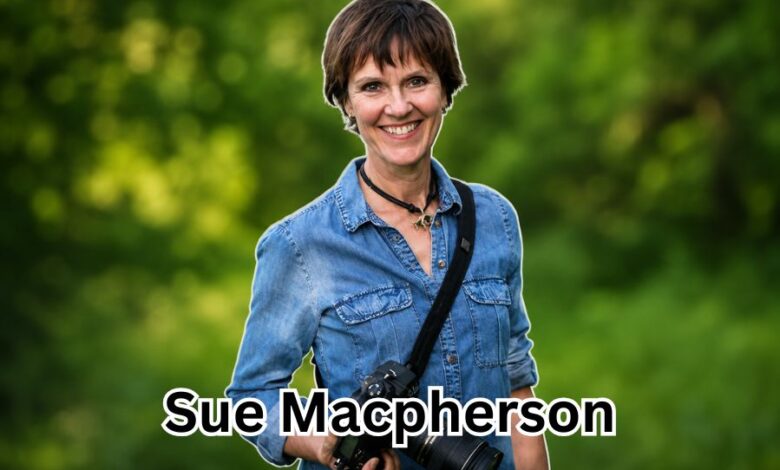
Photography can preserve more than appearances. In the hands of a thoughtful documentary photographer, it can record relationships, reveal overlooked experiences and help viewers understand lives very different from their own. Sue Macpherson has built her photographic practice around that idea. A British portrait and social documentary photographer with the distinction ARPS, she is known for work shaped by travel, education, community engagement and close observation.
Her portfolio ranges from school life in Uganda and the routines of a Dorset racing stable to visual impairment, artists, landscapes and family portraiture. Rather than chasing spectacle, Macpherson has repeatedly focused on the quieter details through which character, resilience and daily life become visible.
Quick Bio
| Field | Details |
|---|---|
| Full Name | Sue Macpherson |
| Profession | Documentary and portrait photographer |
| Nationality | British |
| Birthplace | Dar es Salaam, Tanzania |
| Known For | Documentary photography, portraiture and social storytelling |
| Photography Distinction | Associate of the Royal Photographic Society (ARPS) |
| Education | Harrow College of Art, Gloucester College and Arts University Bournemouth |
| Notable Project | LOOK, a photography project about visual impairment |
| Other Major Work | Educational and charity photography projects in Uganda |
| Teaching Career | Photography teacher at Bryanston School, Dorset |
| Photography Style | Human-centred, observational and empathetic |
| Current Status | Continues to be recognised for documentary and portrait photography |
Sue Macpherson’s Early Life and First Encounter with Photography
Sue Macpherson was born in Dar es Salaam, Tanzania, and spent much of her childhood in different parts of Africa. That upbringing exposed her to changing landscapes, communities, and ways of life at an early age, while later travel to remote places became an important influence on her visual interests. When she was nine, she was sent to boarding school in Taunton, Somerset, so that she could receive greater continuity in her education. The move separated her from the African environment in which she had grown up, but photography eventually gave her a way to observe, remember and interpret the world around her.
A decisive moment arrived on her fourteenth birthday, when she received her first simple camera. A member of staff at Taunton School taught her the fundamentals of darkroom work, introducing her not only to taking pictures but also to the careful process of developing and printing them. That experience sparked a lasting affection for black-and-white photography. It also encouraged the patience evident in her later documentary work, where a successful image often depends on waiting, listening, and recognizing meaning in an apparently ordinary moment.
Education, Teaching and Professional Development
Macpherson studied at Harrow College of Art and later continued her education at Gloucester College, where she qualified for a diploma associated with the British Institute of Professional Photography. These studies helped turn an early enthusiasm into a disciplined understanding of portraiture, composition and professional practice. During the years when her three children were young, she worked as a freelance photographer while also qualifying as a Design Technology teacher.
Teaching gradually became a major part of her working life, and for a period it left limited time for her personal photography. However, the educational and photographic sides of her career were never entirely separate. Macpherson went on to teach photography at Bryanston School in Dorset, sharing practical knowledge with younger photographers while continuing to develop her own projects. Her career, therefore, reflects two connected forms of storytelling: creating photographs herself and helping students learn to communicate through images.
Her commitment to formal development continued well into the future. In 2016, she completed a master’s degree in photography at Arts University Bournemouth. Her major project received the university’s Photography Prize, an achievement that demonstrated how her mature documentary practice combined technical control with a socially meaningful subject.
The Documentary Approach That Defines Sue Macpherson
Observation Before Intervention
The most consistent quality in Sue Macpherson’s photography is her interest in people as individuals rather than as symbols. Her portraits tend to feel calm and considered because they are built around observation, conversation and trust. In documentary settings, she looks for gestures, routines and relationships that communicate something larger without forcing the subject into an artificial narrative.
This approach is especially valuable when photographing communities or personal challenges. Documentary photography can easily become intrusive when hardship is presented mainly for emotional effect. Macpherson’s work instead emphasizes dignity, participation and context. Her photographs may show difficulty, but they also leave room for humor, work, confidence and independence. The result is a body of work that invites attention without reducing people to the circumstances being documented.
Black and White, Natural Detail and Visual Narrative
Although Macpherson works digitally as well as through traditional methods, black-and-white imagery has remained an important part of her visual language. Removing color can concentrate attention on expression, light, form and texture, particularly in portraiture. At the same time, her broader portfolio shows that she chooses technique according to the needs of a project rather than relying on a single visual formula.
Her photographs from farms, schools and community projects often depend on sequences rather than isolated standout images. This is the essence of visual narrative: one frame establishes place, another shows activity, and another reveals the human relationship at the heart of the story. Together, the photographs create an account that is more layered than a single dramatic picture could provide.
Abbotsbury Swannery and the ARPS Distinction
A major turning point in Sue Macpherson’s career was her long-term documentary project on Abbotsbury Swannery in Dorset. She worked on the subject for approximately two years, documenting the environment and its routines in depth. The project required sustained access and careful attention to the interactions among people, birds, and place.
In 2007, this work earned her an Associateship of the Royal Photographic Society, giving her the professional distinction ARPS. The award was significant because it recognized not merely technical competence but the coherence and purpose of an extended photographic panel. For Macpherson, the project confirmed the value of repeatedly returning to a subject. It also established a pattern that continued in later work: choosing a community or environment, spending enough time to understand its rhythms and building a story through connected images.
Photographing Educational Projects in Uganda
One of the most socially important parts of Macpherson’s career has been her voluntary work for the Henry van Straubenzee Memorial Fund, a charity created to support education in Uganda. Because she had grown up in Africa and remained interested in travel and community life, the opportunity brought together several parts of her personal history.
As the charity’s photographer, she traveled to Uganda to document school life, completed projects, ceremonies and the people affected by improvements in educational facilities. These were not simply travel photographs. They served a practical purpose in fundraising materials, publications and public communication, helping supporters understand how donations were being used. Her pictures recorded buildings and resources, but they also showed students, teachers, families and celebrations, giving the charity’s work a human presence.
The Uganda portfolio illustrates why responsible photography matters in humanitarian settings. Images used by charities can influence how entire communities are perceived. Macpherson’s emphasis on everyday activity and shared achievement helps avoid a narrow portrayal based only on need. Education, energy and community participation become central parts of the visual story.
LOOK: A Documentary Project About Sight Loss
The project that most clearly demonstrates the personal and ethical depth of Sue Macpherson’s work is LOOK, created during her master’s degree in photography. The idea grew from witnessing her mother-in-law lose her sight and recognizing how visual impairment can affect independence, access to technology and social connection. Rather than treating sight loss as an abstract theme, Macpherson began with a personal question: how does an ordinary task change when a person can no longer rely fully on vision?
Working with the Dorset Blind Association, she met people living with different degrees of visual impairment. The participants collaborated with her and, where necessary, re-enacted situations they had experienced. This method required discussion and planning, making the subjects active contributors rather than passive objects of observation. Macpherson wanted the photographs to show not only the difficulties but also the courage, adaptability, and practical intelligence involved in living a fulfilled life with sight loss.
The title LOOK carries a deliberate challenge. It asks sighted viewers to examine the photographs while also questioning what it means to see and understand another person’s experience. Familiar activities become newly significant when the viewer imagines completing them with limited or no sight. The project was exhibited and published as a photographic book, and it received the Arts University Bournemouth Photography Prize in 2016. Its strength lies in the balance between awareness and respect: it explains without patronizing and creates empathy without relying on exaggerated emotion.
Racing Stables, Alpaca Farming and Everyday Working Life
Macpherson’s social documentary interests are not limited to charities or explicitly social issues. Projects on Sea Barn Racing Stables and Inca Alpacas reveal her fascination with skilled work, animals and rural routines. Such environments contain repeated actions that outsiders may rarely notice, including preparation, feeding, cleaning, training, handling and the physical effort required to keep an enterprise functioning.
By photographing these activities over time, she turns practical routines into coherent human stories. The animals are important, but so are the relationships between owners, workers and the land. These projects demonstrate that documentary photography does not need a crisis or major public event to be meaningful. A small workplace, carefully observed, can reveal commitment, expertise and a distinctive way of life.
Portraiture, Exhibitions and Her Wider Contribution
Portraiture has remained central throughout Sue Macpherson’s career. Earlier in her professional life, she photographed children and families and completed editorial commissions. Her work has also been shown in galleries, arts centers, museums, hospitals and Royal Photographic Society exhibitions. The subjects across her portfolio include artists, community figures, students, rural workers and people participating in personal documentary projects.
Her contribution is best understood in terms of consistency rather than celebrity. She has sustained a practice built on curiosity, technical discipline and respectful collaboration, while also teaching photography and using images to support educational and community organizations. For developing photographers, her career offers a useful lesson: meaningful work often grows from long-term relationships with subjects rather than from constant novelty.
Conclusion
Sue Macpherson has developed a photographic career in which portraiture and documentary storytelling are closely connected. From receiving a camera at fourteen and learning darkroom techniques to earning an ARPS distinction and completing an award-winning master’s project, her development has been shaped by patient learning and sustained observation. Her photographs of Ugandan schools, people living with sight loss, rural businesses, artists and families show an enduring interest in how individuals meet the demands of everyday life.
What makes her work distinctive is not dramatic presentation but attention, empathy and narrative purpose. She allows projects to unfold over time, treats participants as collaborators and uses technical skill in service of the story rather than as a distraction from it. Through photography, volunteering and education, Sue Macpherson has shown that a camera can do more than record a scene. It can preserve experience, strengthen understanding and bring dignity to stories that deserve to be seen.
(FAQs)
Who is Sue Macpherson?
Sue Macpherson is a British documentary and portrait photographer known for creating thoughtful visual stories about people, communities, education and everyday life.
What type of photography is Sue Macpherson known for?
She is primarily known for documentary, portrait and social photography, with an emphasis on authentic experiences, personal dignity and meaningful human connections.
What is Sue Macpherson’s LOOK photography project?
LOOK is a documentary project exploring the experiences of people living with visual impairment. It highlights their independence, resilience and everyday challenges through respectful portraiture.
What does the ARPS title mean?
ARPS means Associate of the Royal Photographic Society. Sue Macpherson received this distinction for a documentary photography project focusing on Abbotsbury Swannery in Dorset.
Has Sue Macpherson worked on humanitarian projects?
Yes, Sue Macpherson has photographed educational projects in Uganda connected with the Henry van Straubenzee Memorial Fund, helping document schools, communities and charitable development work.