Anyika Onuora: How She Turned Speed, Survival, and Sacrifice into an Olympic Legacy
From Liverpool's Sprint Tracks to Olympic Glory, Her Remarkable Journey of Speed, Strength, and Resilience

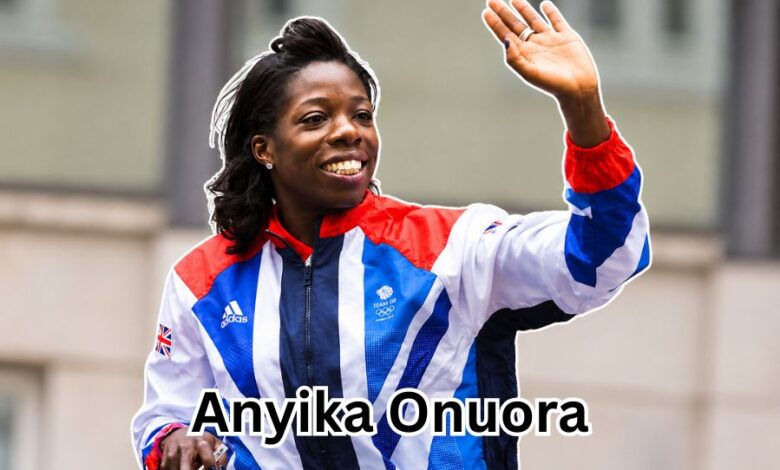
Anyika Onuora built a career defined by far more than natural speed. Born in Liverpool on 28 October 1984, the British sprinter competed in the 100 meters, 200 meters, 400 meters, and relays over an international career spanning about 18 years. Her record includes medals at Commonwealth, European, World, and Olympic levels. Yet statistics alone do not explain why her story remains compelling. Onuora adapted to new events, recovered from a serious illness, and continued competing through experiences that tested both her confidence and her body. Her bronze medal in the women’s 4×400-meter relay at the 2016 Rio Olympics became the most celebrated achievement of her career. Still, the strength behind it had been built through patience, disappointment, teamwork, and resilience.
Quick Bio
| Field | Details |
|---|---|
| Full Name | Anyika Onuora |
| Date of Birth | 28 October 1984 |
| Age | 41 years old |
| Birthplace | Liverpool, England |
| Nationality | British |
| Profession | Retired sprint track and field athlete |
| Specialised Events | 100m, 200m, 400m, 4x100m relay and 4x400m relay |
| Major Achievement | Olympic bronze medal in the 4x400m relay at Rio 2016 |
| Other Honours | World, European and Commonwealth medals |
| 400m Personal Best | 50.87 seconds |
| Career Length | Approximately 18 years |
| Retirement Year | 2019 |
| Memoir | My Hidden Race |
| Known For | Versatility, resilience and recovery from malaria |
Early Life and the Making of Anyika Onuora
Growing up in Liverpool, Onuora found that sprinting gave her a clear outlet for her competitive energy and athletic ability. She attended Archbishop Blanch School before studying economics at Liverpool John Moores University, where she received support through the sports scholarship program. Her first major junior breakthrough came at the 2003 European Athletics Junior Championships, where she finished fifth in the 100 meters and won silver with Britain’s 4×100-meter relay team. That result showed both her individual promise and her reliability as a relay runner.
Her progress as a senior became more visible in 2006. Representing England at the Commonwealth Games in Melbourne, she reached the 100-meter semi-finals and earned silver in the 4×100-meter relay. Later that year, she collected another silver in the relay at the European Championships. These performances established her as a dependable member of Britain’s sprint program, even though individual success remained difficult. The 100 and 200 meters are unforgiving events in which fractions of a second separate finalists from athletes eliminated in earlier rounds, so Onuora’s early career became an example of persistence rather than instant stardom.
Olympic Frustration and a Career-Changing Decision
Onuora was selected for Britain’s 4×100-meter squad for the 2008 Beijing Olympics, but she did not compete in the final team at the stadium. For an athlete who had worked toward the Games for years, selection without the chance to race was a painful disappointment. She finally made her Olympic debut at London 2012, competing in both the 100 and 200 meters. Although she did not reach the medal rounds, appearing at a home Olympics confirmed that she belonged on the sport’s biggest stage.
Why Moving to 400 Meters Mattered
The shift toward the 400 meters changed the direction of her career. A short sprinter depends mainly on acceleration and maximum speed, while a 400-meter athlete must combine speed with endurance, pacing, and technique under intense fatigue. Sports-performance specialists often regard it as one of athletics’ most demanding races. Onuora’s background in the 100 and 200 meters gave her valuable speed, while years of relay racing developed tactical awareness and composure. In 2015, she lowered her 400-meter personal best to 50.87 seconds and helped Britain win bronze in the women’s 4×400-meter relay at the World Championships in Beijing. The result proved that moving farther upward had transformed her into a global medallist.
The Malaria Crisis That Nearly Ended Everything
The most remarkable chapter of Anyika Onuora’s career began away from the track. In late 2015, she contracted malaria and became seriously ill, spending time in hospital with a potentially life-threatening condition. Elite athletes usually build fitness through planned training blocks, but Onuora first had to regain enough strength to walk normally before she could consider sprinting again. Her recovery became a powerful case study in resilience because serious illness affects muscle condition, energy, confidence, and the body’s tolerance for training.
Less than a year later, she produced one of the strongest performances of her career at the 2016 European Championships in Amsterdam. Onuora won bronze in the individual 400 meters and then helped Britain secure gold in the 4×400-meter relay. The individual medal was especially meaningful because it showed that she had not merely returned to fill a team place. She had become one of Europe’s leading one-lap runners.
Anyika Onuora and the Historic Rio 2016 Bronze
At the Rio Olympics, Onuora joined Eilidh Doyle, Emily Diamond, and Christine Ohuruogu in Britain’s women’s 4×400-meter relay team. The quartet finished third in 3 minutes 25.88 seconds, behind the United States and Jamaica. Their bronze was Britain’s first Olympic medal in the women’s 4×400-meter relay since 1992, making the result historically important. It also became Team GB’s 66th medal of the Games, taking the nation beyond its London 2012 total.
The race showed why relay success requires more than four fast athletes. Each runner had to judge their effort, protect track position, complete a clean baton exchange, and remain composed under Olympic pressure. Onuora’s contribution carried extra weight because only months earlier she had been rebuilding basic strength after malaria. Reaching the podium in roughly ten months was evidence of exceptional physical and psychological determination.
A Medal Record Built Across Major Championships
Onuora’s success spanned various competitions and sprint disciplines. She earned Commonwealth medals for England, European medals in relay and individual competition, World Championship bronze in the 4×400 meters, and Olympic bronze in Rio. She also contributed to international relay success later in her career before retiring in 2019. This range matters because she was not remembered for a single unexpected performance; she remained valuable to British teams over several championship cycles.
Her ability to contribute in both the 4×100 and 4×400 meters demonstrated unusual versatility. The two relays demand different physical qualities and race patterns, yet Onuora adapted successfully to both. Her career offers an important lesson for developing athletes: progress is not always linear, and changing an event can reveal strengths that were previously hidden.
Beyond Medals and the Meaning of My Hidden Race
After retirement, Anyika Onuora spoke more openly about the experiences hidden behind her public image. Her memoir, My Hidden Race, explored racism, body-image pressure, mental strain, abuse, and the personal cost of pursuing success in elite sport. These disclosures challenged the belief that a medal automatically represents a happy or protected journey.
Expert discussions about athlete welfare increasingly emphasize psychological safety, medical care, safeguarding, and the unequal pressures faced by women and minority athletes. Onuora’s testimony matters because it comes from someone who succeeded within the system while also experiencing its failures. By discussing painful subjects publicly, she extended her influence beyond results and contributed to a broader conversation about how athletes should be protected and supported.
Conclusion
Anyika Onuora’s career is a story of versatility, endurance, and survival. From her beginnings in Liverpool and early relay medals to her transformation into a world-class 400-meter runner, she repeatedly found ways to progress when the easier choice might have been to stop. Her recovery from malaria, European individual medal, and Olympic bronze form one of British athletics’ most inspiring comeback stories. Just as importantly, her later honesty about racism, mental health, abuse, and athlete welfare gave deeper meaning to her legacy. She should be remembered not only as an Olympic medallist, but as a competitor who adapted across events, strengthened successful teams, survived serious adversity, and used her voice to reveal the realities behind sporting achievement.
(FAQs)
Who is Anyika Onuora and why is she famous?
Anyika Onuora is a retired British track and field athlete from Liverpool. She is best known for winning an Olympic bronze medal in the women’s 4×400-meter relay at the 2016 Rio Olympics.
Which athletics events did Anyika Onuora compete in?
Anyika Onuora competed in the 100 meters, 200 meters, 400 meters, and the 4×100-meter and 4×400-meter relays. Her versatility enabled her to succeed in several sprinting disciplines.
What Olympic medal did Anyika Onuora win?
She won a bronze medal at the 2016 Rio Olympics as part of Great Britain’s women’s 4×400-meter relay team alongside Eilidh Doyle, Emily Diamond, and Christine Ohuruogu.
How did malaria affect Anyika Onuora’s career?
Anyika Onuora contracted malaria in late 2015 and became seriously ill. Despite losing strength and spending time in hospital, she recovered remarkably and won European and Olympic medals during the following season.
When did Anyika Onuora retire from athletics?
Anyika Onuora retired from professional athletics in 2019, bringing an approximately 18-year sporting career to an end. She later shared her personal experiences through her memoir, My Hidden Race.