Pilfer Word Game: The Fast, Clever Word Battle That Rewards Vocabulary and Strategy
Discover the Rules, Strategy, Vocabulary Skills, and Competitive Fun Behind Pilfer Word Game

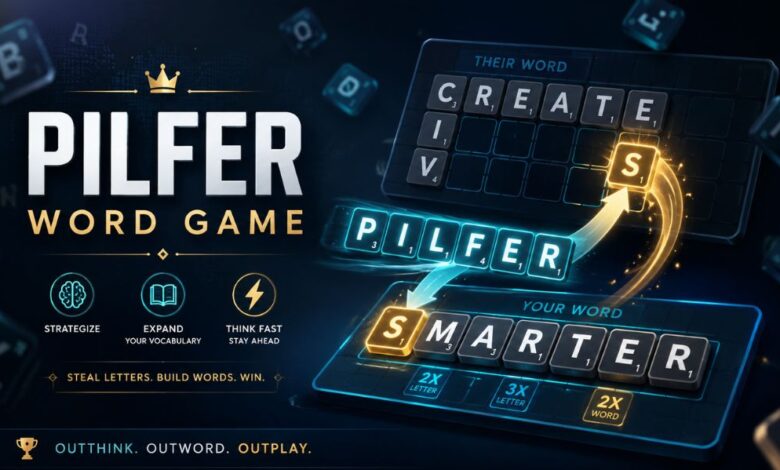
In a world filled with crossword puzzles, anagrams, spelling challenges, and vocabulary games, Pilfer Word Game stands out by turning ordinary word-building into a fast-paced competition. Instead of simply creating words from available letters and leaving them untouched, players must constantly watch the board, react to new letters, and look for opportunities to transform words that have already been played. That extra layer of competition gives the game a distinctive personality and makes every round feel unpredictable.
The basic idea is easy enough for a new player to understand, but becoming genuinely good at the game requires much more than knowing a large number of words. Players need vocabulary knowledge, anagram recognition, quick typing, concentration, pattern awareness, and strategic thinking. A word that appears safe one moment may become an opportunity for another player as soon as a useful new letter arrives. This combination of language and strategy is what makes Pilfer more than a simple spelling exercise.
What Is Pilfer Word Game?
Pilfer Word Game is a real-time competitive word-building game designed for two or more players. Letters become available during the match, and players use them to form valid words. The important twist is that words do not necessarily remain with the person who created them. Another player may be able to take, or “pilfer,” an existing word by rearranging its letters into a new valid word and, when necessary, combining those letters with additional free letters.
This mechanic changes the way players approach the board. In many traditional word games, creating a valuable word is the main objective. In Pilfer, creating a word is only the beginning. Once it appears, every opponent can study its letters and consider whether it can be transformed. Players therefore need to think about both offensive opportunities and defensive weaknesses.
The name “Pilfer” fits the concept particularly well because the word’s ordinary meaning is to take or steal something. In the game, however, the stealing is purely playful: players take control of words rather than possessions. The result is an energetic form of word competition where ownership can change rapidly.
How the Pilfer Word Game Works
Building Words From Free Letters
A Pilfer match begins with letters gradually becoming available to the players. These are commonly treated as free letters, meaning they are not yet part of anyone’s word. A player who recognizes a valid combination can enter a word using some or all of those letters before another participant claims them.
Because the game unfolds in real time, speed matters. Players cannot spend unlimited time examining every possible combination. They need to quickly notice common patterns, identify useful beginnings and endings, and decide whether to form a word immediately or wait for a potentially stronger opportunity.
Under the published rules, playable words must contain at least four letters. A previously used word cannot simply be played again, and players cannot take an existing word merely by adding an “s” to it. These restrictions encourage genuine transformations rather than easy plural conversions.
Stealing and Transforming Existing Words
The most interesting part of Pilfer is the ability to steal another player’s word. Suppose an opponent controls a word whose letters can be rearranged into a different word. If the rules allow the transformation, another player may claim the new version. Additional free letters can also create opportunities to expand or completely reshape an existing word.
This means that players should learn to view words as collections of movable letters, not as fixed pieces of language. Someone who sees only the original meaning of a word may miss an obvious transformation. Strong players mentally separate the letters, test possible combinations, and recognize patterns that can produce longer or more difficult words.
A four-letter word can therefore become the foundation of a much larger play later in the game. This creates a chain-reaction feeling in which a single group of letters may change hands several times.
Why Pilfer Feels Different From Traditional Word Games
Most familiar word games reward vocabulary, but Pilfer introduces a stronger element of continuous interaction. Players are not working independently on isolated puzzles. Every successful move changes the possibilities available to everyone else.
That creates tension because a useful word can attract attention from several opponents—the player who sees the next transformation first gains the advantage. There is also no guarantee that a long word will remain secure. Sometimes a seemingly impressive word contains exactly the combination of letters another player needs.
The experience therefore combines several forms of thinking at once. Players must recognize words, calculate letter combinations, monitor opponents, remember earlier plays, and react when new letters appear. This makes the game especially appealing to people who enjoy anagrams but want something more competitive than solving them on their own.
Strategy Matters as Much as Vocabulary
Learn to See Letter Patterns
Knowing thousands of words is valuable, but vocabulary alone does not guarantee success. A player also needs to recognize letter structures quickly. Common prefixes, suffixes, vowel combinations, and consonant clusters can help reveal possible transformations before an opponent notices them.
Instead of reading an existing word only as a complete word, experienced players often mentally break it apart. They may focus on its vowels, repeated consonants, possible endings, or letters that could combine naturally with newly available characters.
This skill improves with practice. Over time, players begin recognizing transformations almost automatically because familiar combinations become easier to spot.
Do Not Ignore Shorter Words
Players may naturally chase long and impressive words, but smaller words can still be strategically important. A legal four- or five-letter word may secure letters before another player can use them, while also creating the foundation for a future expansion.
The challenge is that short words can sometimes be vulnerable. A compact word made from flexible letters may offer opponents several possible transformations. Players therefore need to consider whether claiming a word immediately provides enough value or creates an attractive target.
Watch Opponents Constantly
Focusing only on the free letters is one of the easiest ways to miss valuable opportunities. Every word controlled by another player represents a potential source of letters.
Good players repeatedly scan the entire playing area. They ask themselves whether an existing word can be rearranged, whether a newly revealed letter can extend it, and whether two or three possible transformations should be prepared mentally before the required letter even appears.
This is where Pilfer becomes genuinely strategic. The strongest move is not always the first word you can see. Sometimes it is the transformation you anticipate several seconds before everyone else.
The Vocabulary and Mental Benefits of Playing Pilfer
Although Pilfer is primarily entertainment, regular play can naturally encourage several language skills. Players repeatedly encounter unfamiliar words, unusual letter arrangements, spelling patterns, and word families. That repetition may strengthen spelling awareness and vocabulary recognition, especially when players take the time to investigate unfamiliar words after a match.
The game can also encourage mental flexibility. Because letters must constantly be rearranged into new combinations, players practice looking at the same information from different perspectives. A group of letters that appears useless in one arrangement may become valuable when approached differently.
Concentration is equally important. Players must monitor newly appearing letters while tracking words already controlled by other participants. This divided attention makes the experience feel more mentally active than a slower turn-based puzzle.
Common Mistakes New Players Make
One common mistake is waiting too long for the perfect word. New players sometimes hold back, hoping that additional letters will produce something longer. Meanwhile, another player claims the available letters first. Pilfer rewards ambition, but it also rewards decisive action.
Another mistake is becoming emotionally attached to a word after creating it. Losing a strong word can be frustrating, but stealing is the game’s central mechanic. Instead of focusing on what was lost, productive players immediately analyze the new word and search for another way to transform it.
Players also struggle when they read words only by meaning rather than by structure. Pilfer requires anagram thinking. The letters matter just as much as the word they currently form.
Finally, typing speed can influence fast matches, but accuracy remains important. Entering incorrect combinations repeatedly wastes valuable moments. A slightly slower player with strong recognition and careful execution can still perform effectively.
How a Pilfer Match Ends
According to the official game instructions, once the final free letters have been revealed, an endgame timer begins. Players can continue creating and taking words during this final period. When the timer expires, the winner is determined by who controls the most letters across their word list.
This scoring approach encourages players to think beyond the number of individual words they own. Longer words can become extremely valuable because controlling more letters directly improves the player’s position. A late steal involving a large word can therefore dramatically change the outcome.
The final moments can be especially intense because players know there is limited time to find one last transformation. A match that appears decided can still change if someone spots a valuable opportunity before the timer reaches zero.
Why Pilfer Word Game Can Become So Engaging
The lasting appeal of Pilfer Word Game comes from its combination of simple rules and unpredictable outcomes. The basic mechanics can be learned quickly, yet every new group of letters creates a different puzzle. Because other players continually change the board, there is no single fixed solution.
It also creates the satisfying feeling of discovering something hidden inside a familiar word. Transforming an opponent’s word into a completely different one can feel like solving a miniature puzzle while simultaneously gaining a competitive advantage.
For word enthusiasts, that mixture of discovery, pressure, and strategy gives Pilfer considerable replay value. Each match provides another opportunity to recognize words more quickly, expand vocabulary, anticipate transformations, and develop a more flexible approach to letters.
Conclusion
Pilfer Word Game offers a refreshing variation on competitive wordplay by turning ordinary vocabulary-building into a constantly changing battle of letters. Players create words from available letters, search for ways to transform existing words, and compete to control as many letters as possible before the match ends.
What makes the game particularly interesting is that success depends on much more than memorizing difficult vocabulary. Pattern recognition, speed, observation, strategic timing, spelling knowledge, and adaptability all influence performance. Every word is both an achievement and a possible opportunity for an opponent, keeping players involved from the first letters to the final seconds.
For anyone who enjoys anagrams, vocabulary puzzles, or competitive language games, Pilfer provides a challenging format that is easy to understand but difficult to master. The more you play, the more you begin to see words not as fixed combinations, but as collections of letters filled with new possibilities.
(FAQs)
1. What is the Pilfer Word Game?
Pilfer Word Game is a competitive word-building and anagram game in which players create words and can transform or steal existing ones using available letters.
2. How do you play Pilfer Word Game?
Players use available letters to form valid words while watching for opportunities to rearrange and expand words already created by other players.
3. What skills are useful for playing Pilfer?
Strong vocabulary, spelling, pattern recognition, quick thinking, concentration, and anagram-solving skills can help players perform better during competitive matches.
4. Is Pilfer Word Game good for vocabulary?
Yes. Regular play can expose players to a range of words, spelling patterns, and letter combinations, making it an entertaining way to practice vocabulary.
5. What makes Pilfer different from other word games?
Its main difference is the word-stealing mechanic, which allows players to transform existing words and claim them, adding strategy and competition to traditional word building.
