Mark Hines: How He Turned Glass, Fire, and Form Into Distinctive American Art
From Stained Glass to Raku Ceramics, His Creative Journey Reflects Decades of Craftsmanship and Artistic Evolution.

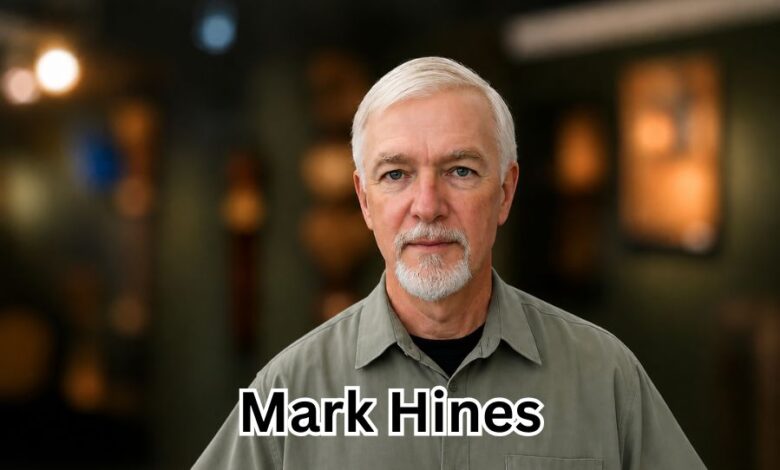
Mark Hines has built a distinctive artistic identity through a long exploration of glass, ceramics, texture, color, and sculptural form. Born and raised in Southern California, he developed his craft through a combination of independent experimentation and studies in Glass Design and Ceramics at the University of Southern California. His professional journey began with stained glass in 1976, but rather than remaining attached to one medium, Hines gradually moved into ceramics, became known for Raku vessels, and eventually returned to glass with a new understanding of what the material could become. This willingness to move between disciplines has helped define his work. Instead of treating glass and clay as separate creative worlds, he has carried techniques and lessons from one medium into the other, resulting in pieces that can serve as decorative objects while maintaining a strong sculptural character.
Quick Bio
| Detail | Information |
|---|---|
| Full Name | Mark Hines |
| Profession | Glass and Ceramic Artist |
| Known For | Stained Glass, Raku Ceramics, Slumped Glass Art |
| Nationality | American |
| Birthplace/Background | Southern California, USA |
| Education | Studied Glass Design and Ceramics at the University of Southern California |
| Career Beginning | Began working professionally with stained glass in 1976 |
| Artistic Mediums | Glass, Ceramics, Enamels, Iron |
| Notable Style | Sculptural glass forms, sand-molded designs, Raku pottery |
| Current Association | Prescott, Arizona |
Mark Hines and the Foundations of His Artistic Career
Growing Up in Southern California
Mark Hines was born and raised in Southern California, a region with a strong history of experimentation in modern art, craft, architecture, and design. Public biographies of the artist describe him as largely self-taught, an important detail because it explains the practical, exploratory nature of his development. He did not build his career around a single rigid artistic formula. Instead, his work evolved through direct experience with materials, processes, heat, surface, and structure.
Hines also studied glass design and ceramics at USC early in his career. That combination of formal study and independent practice appears throughout his later work. His pieces often reveal careful attention to proportion and construction while still allowing room for irregularity and natural-looking surfaces. It is this balance between technical control and material unpredictability that became one of the most recognizable qualities of his artistic approach.
How Mark Hines Began With Stained Glass
The 1976 Starting Point
A key date in the story of Mark Hines is 1976, when he began working professionally with stained glass. Stained glass requires more than an eye for color. The artist must also understand how separate sections work together structurally and how light changes the appearance of a finished composition. Those early experiences gave Hines valuable knowledge of transparency, color relationships, framing, and the physical behavior of glass.
Stained glass also introduced a theme that would continue through his career: light as part of the artwork itself. Unlike an opaque painted surface, glass changes according to its surroundings. Daylight, artificial illumination, viewing angle, color, and thickness can all alter what the viewer sees. Hines later carried this understanding into his sculptural glass pieces, where transparency and reflected light contribute significantly to the final visual effect.
His Move From Glass Into Ceramics
Discovering the Possibilities of Raku
After establishing himself in stained glass, Mark Hines expanded his practice into ceramics, particularly Raku pottery. The shift was important because clay behaves very differently from glass. Ceramics allowed him to work with volume, mass, surface texture, glaze, and three-dimensional form in ways that stained glass could not.
Raku is especially suited to artists interested in variation and unpredictability. Rapid firing and post-firing processes can produce dramatic surfaces, metallic effects, smoky areas, and patterns that are difficult to reproduce exactly. Hines became associated with Raku vases and large ceramic forms, developing pieces in which the firing process itself contributed to the finished appearance.
This period demonstrates an important quality in his career: he was prepared to move beyond a successful technique to continue learning. Rather than repeating stained-glass designs indefinitely, he entered another medium and developed a different vocabulary of texture and form. That experience would eventually become valuable when he returned to glass.
Why Mark Hines Returned to Glass
Bringing Ceramic Experience Into a Familiar Material
Mark Hines eventually returned to what gallery biographies have described as his first artistic love: glass. The return, however, was not simply a revival of his earlier stained-glass practice. By then, years of working with ceramics had changed how he approached shape, scale, texture, and three-dimensional objects.
He began producing a broad range of modern slumped-glass designs. Glass slumping involves heating glass until it softens enough to take the shape of a mold. Hines has used sand molds in this process, helping create forms with an organic character rather than an overly mechanical appearance.
This combination of heat, gravity, molds, and hand craftsmanship means individual objects can retain subtle differences. The technique gave Hines a way to unite the transparency and luminosity he understood from stained glass with the sculptural qualities he had developed through ceramics.
The Signature Look of Mark Hines Glass
Sand-Molded Forms and Iron Structures
One of the strongest visual characteristics of Mark Hines’ later work is the relationship between glass and metal. His slumped glass pieces are frequently paired with iron stands, allowing translucent or coloured glass forms to sit within darker structural frameworks. The contrast gives the work both delicacy and visual strength.
His range has included vases, bowls, chargers, wall sculptures, candleholders, and other decorative glass forms. Gallery descriptions also note that requests from interior designers encouraged the production of larger pieces. Oversized work naturally changes the way art interacts with a room. Instead of appearing as a small accessory, a large glass vessel or sculptural form can become a focal point within an interior.
The iron supports are therefore more than practical additions. They become part of the overall composition, creating a dialogue between the glass’s fragile appearance and the metal’s solidity.
Color, Texture, and Light in Mark Hines’ Work
Hines’ glasswork demonstrates how strongly decorative art can depend on changing visual conditions. A glass object does not look the same throughout the day. Natural light can reveal transparency, internal color, reflections, edges, and shadows that are less visible under other lighting conditions.
Some of his works use enamels and rich color treatments to increase their visual intensity, while the sand-molded surfaces contribute a softer, more organic quality. The result is a style that can feel contemporary without becoming cold or excessively industrial.
His background in ceramics is also important here. Raku taught him to appreciate surfaces that do not need to appear perfectly uniform. In slumped glass, controlled variation can similarly become part of the object’s beauty. Small differences reinforce the handcrafted identity of a piece rather than making every work appear factory-produced.
Recognition and the Place of His Work in Interior Design
From Studio Art to Collectible Design
Mark Hines’ designs have received attention beyond traditional craft circles. Gallery biographies note that his work has appeared in Architectural Digest, and his pieces have also entered collections in various locations internationally. Such exposure helps explain why his work has appealed not only to individual collectors but also to people involved in interior decoration and design.
The connection to interiors is especially natural because many of his objects exist at the intersection of functional design and sculpture. A bowl, vase, charger, or candleholder has an identifiable purpose or familiar form, yet Hines enlarges and reshapes these objects until their artistic presence becomes equally important.
That balance allows his work to fit into residential settings without losing the qualities associated with studio art. Instead of asking viewers to choose between decoration and artistic expression, his work often brings the two together.
What Makes Mark Hines’ Artistic Development Interesting?
One of the most compelling aspects of the Mark Hines story is not a single vase, glass sculpture, or ceramic piece. It is the way one stage of his career prepared him for the next. Stained glass developed his understanding of light, color, and construction. Ceramics gave him deeper experience with volume, texture, firing, and organic surfaces. Slumped glass later allowed those separate lessons to converge.
His career therefore offers an example of creative evolution rather than creative repetition. Artists can become strongly identified with one successful style, making experimentation commercially difficult. Hines instead moved across materials and eventually returned to an earlier medium with an expanded range of skills.
This progression gives his work a sense of continuity even when the materials change. Glass, ceramic, sand molds, enamels, and iron may behave differently. Still, they are connected by an interest in form, surface, craftsmanship, and the relationship between an object and the space around it.
Mark Hines Today and His Continuing Artistic Identity
Contemporary gallery information continues to associate Mark Hines with modern slumped glass and describes Mark and Jeanne Hines as residing in Prescott, Arizona. His work is still represented in art and craft galleries, where earlier ceramic pieces and later glass designs contribute to a career that now spans several decades.
This longevity matters because it shows that Hines’ artistic identity was not built around one temporary design trend. His work emerged through repeated experimentation with traditional craft processes and gradually developed into a recognizable combination of handmade glass, sculptural form, and functional presentation.
Collectors encountering his work today may discover pieces from different stages of that journey, from Raku ceramics to large contemporary glass designs. Together, those works provide a broader picture of an artist who continued changing his methods without completely abandoning the lessons of his earlier practice.
Conclusion
Mark Hines has created a career defined by curiosity, craftsmanship, and an unusual ability to carry knowledge from one artistic medium into another. Beginning with stained glass in 1976, he developed an understanding of color, structure, and light before expanding into ceramics and achieving recognition for his Raku work. His eventual return to glass introduced a new phase centered on slumped forms, sand molds, bold scale, enamels, and iron supports.
What makes his story particularly meaningful is the continuity behind those changes. Each stage contributed something to the next, allowing Hines to transform decades of practical experience into objects that combine art, craft, sculpture, and interior design. His body of work demonstrates that artistic development does not always require abandoning the past; sometimes the strongest creative progress comes from returning to familiar materials with entirely new knowledge.
(FAQs)
Who is Mark Hines?
Mark Hines is an American glass and ceramic artist known for stained glass, Raku pottery, and sculptural slumped-glass designs.
What is Mark Hines famous for?
He is best known for combining glass, ceramics, color, texture, and metal structures in distinctive handcrafted artworks.
When did Mark Hines begin his career?
Mark Hines began working professionally with stained glass in 1976, a work that became the foundation of his artistic career.
What type of art does Mark Hines create?
His work includes slumped glass, Raku ceramics, vases, bowls, wall sculptures, chargers, and decorative glass pieces.
Where does Mark Hines live?
Current gallery information lists Mark and Jeanne Hines as associated with Prescott, Arizona, where his artistic work is still represented.