Celia María Cuccittini: The Mother Behind Lionel Messi’s Historic Journey
The Quiet Strength, Sacrifice and Family Support Behind Lionel Messi’s Extraordinary Rise

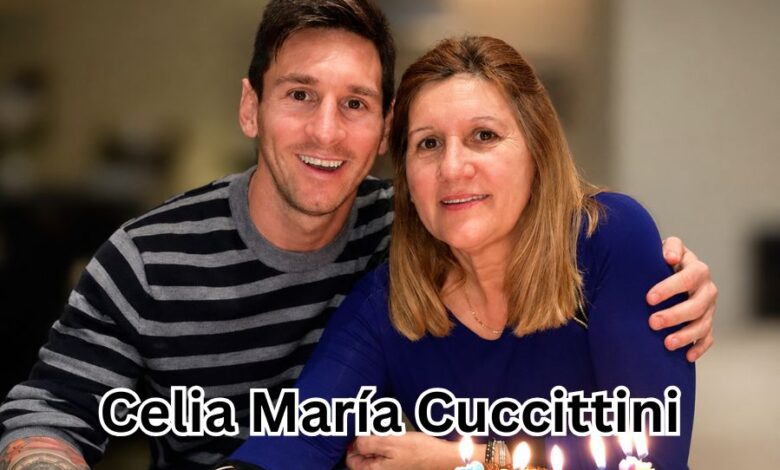
Introduction
Celia María Cuccittini is widely recognised as Lionel Messi’s mother. Yet that simple connection overlooks the steady and deeply personal role she has played in his life. Long before the major trophies, global sponsorships and packed stadiums, she was part of a working family in Rosario trying to give four children stability, encouragement and a strong sense of belonging.
Celia has not attempted to build an independent celebrity career around her son’s achievements. Her public appearances have usually been connected to family occasions, important football matches and national-team tournaments. This private approach has made her an intriguing figure for supporters who want to understand the family environment that shaped Messi’s personality, resilience and reserved character.
Her influence can be seen not through a formal job title or public position, but through the close relationship she maintains with her children. Family loyalty, emotional support, and attachment to Rosario have remained central themes throughout Lionel Messi’s life, even as his professional journey has carried him from Argentina to Barcelona, Paris, and Miami.
Quick Bio
| Profile Detail | Information |
|---|---|
| Full Name | Celia María Cuccittini |
| Known For | Mother of Lionel Messi |
| Date of Birth | January 23, 1960 |
| Birthplace | Rosario, Argentina |
| Nationality | Argentine |
| Spouse | Jorge Horacio Messi |
| Children | Rodrigo, Matías, Lionel and María Sol |
| Occupation | Former workshop worker and part-time cleaner |
| Famous Family Connection | Lionel Messi’s mother |
| Residence | Argentina |
| Public Presence | Appears at major family and football events |
| Notable Tribute | Lionel Messi has her portrait tattooed on his left shoulder blade |
Who Is Celia María Cuccittini?
Celia María Cuccittini is an Argentine mother of four who became internationally known through the career of her third child, Lionel Andrés Messi. She is married to Jorge Horacio Messi, who worked in the metal-manufacturing sector before becoming closely involved in managing Lionel’s professional affairs.
Celia and Jorge raised two older sons, Rodrigo and Matías, Lionel, and their younger daughter, María Sol. Although the family became globally recognisable because of Lionel’s success, most members have maintained a lower public profile than the footballer himself.
Celia’s birth date is commonly reported as 23 January 1960, although detailed primary documentation about her early life is limited. This is an important distinction because many online profiles present unverified personal information as established fact. What is more consistently documented is her connection to Rosario, her working-class background, and her long-standing involvement in her children’s lives.
Her Family Roots in Rosario
A Working Household Before Worldwide Fame
The Messi family’s story began far from the luxury usually associated with modern football stars. They lived in Rosario, a major city in Argentina’s Santa Fe province, where Lionel grew up in a close-knit and football-loving environment.
Jorge worked as a supervisor in a metal factory, while Celia reportedly worked part-time as a cleaner and in a magnet-manufacturing workshop. These occupations reflect the family’s practical reality before Lionel’s talent created opportunities that transformed their circumstances.
The parents were not raising their son with the expectation that he would become an international sporting icon. Football was initially part of family and neighbourhood life. Lionel played with his brothers and cousins, developing his confidence in informal games before joining organised youth football.
This background matters because Messi’s later fame can make his childhood appear inevitable. In reality, his development depended on ordinary family decisions: taking him to training, supporting his interest, managing household responsibilities and responding to the medical and financial challenges that emerged as he grew older.
Raising Four Children
Celia’s family role extended beyond supporting one exceptionally talented child. She was raising four children, each with separate needs and personalities, while helping maintain the household.
Rodrigo, Matías and María Sol have generally avoided the intense level of attention attached to Lionel. Nevertheless, photographs and family statements over the years have shown that the siblings remain connected. Lionel has repeatedly presented family life as a source of stability, suggesting that the relationships formed in Rosario continued to matter even after he became one of the world’s most recognisable figures.
For Celia, Lionel’s career was therefore only one part of a larger family responsibility. Her decisions had to consider not only his football future but also the welfare and education of her other children.
Celia María Cuccittini and Lionel Messi’s Childhood
Lionel’s unusual ability became apparent at a young age. He joined the local Grandoli club as a small child before progressing to the youth system of Newell’s Old Boys. His physical size sometimes led adults to underestimate him, but his control, balance, and natural understanding of the game quickly set him apart from other young players.
Celia supported her son’s development, but another woman in the family played a decisive role: Lionel’s maternal grandmother, also named Celia. She took him to early matches and reportedly encouraged local coaches to allow him to play despite concerns that he was too small.
This detail has occasionally caused confusion because both Messi’s mother and grandmother shared the name Celia. The grandmother’s early belief in his talent became one of the most emotionally significant stories associated with his childhood.
When Lionel was diagnosed with a growth-hormone deficiency, his family faced a serious challenge. The treatment was expensive, and the search for a club capable of supporting his medical and football development eventually led the family toward FC Barcelona.
The Difficult Move from Argentina to Spain
A Family Decision That Changed Football History
In 2000, when Lionel was 13, the family travelled to Spain as Barcelona considered bringing him into its youth academy. The decision created an extraordinary professional opportunity, but it also placed significant emotional pressure on everyone involved.
The family initially moved together. However, Celia later returned to Argentina with Rodrigo, Matías and María Sol, while Lionel remained in Spain with his father. The separation allowed the other children to continue their lives in Rosario, but it was painful for the young footballer.
Lionel later spoke about feeling homesick and crying when returning to Barcelona after visits to Argentina. For several years, he saw his mother only periodically. His determination to continue playing did not lessen the sadness of being separated from her and his siblings.
This period shows why Celia’s influence cannot be measured only by physical proximity. She remained an important emotional presence even while living thousands of miles away. The family accepted a difficult arrangement because it offered Lionel the medical care and elite football training that could protect his future.
Sacrifice Without a Guaranteed Outcome
It is easy to view the move to Barcelona as a straightforward success, given what Messi later achieved. At the time, however, there were no guarantees. Lionel was a shy teenager entering a different culture, adapting to a new football system and living apart from much of his family.
Celia and Jorge had to trust that the opportunity would justify the emotional cost. Their choices were not simply about sporting ambition; they involved health, education, finances and the wellbeing of four children, which made the decision feel broader than football alone.
That uncertainty makes the family’s sacrifice more meaningful. They were not supporting an established star. They were supporting a child whose talent was exceptional but whose professional future remained unknown, and that made the commitment especially significant.
Lionel Messi’s Tattoo Honouring His Mother
One of the clearest public signs of Lionel’s bond with Celia is the portrait of her tattooed on his left shoulder blade. It is believed to be among his earliest tattoos and remains one of his most personal.
Messi has several tattoos connected to his family, faith, football identity and children, but the portrait of his mother carries particular significance. It represents the person associated with his childhood, emotional security and Rosario roots.
The tattoo has become widely recognised because it is visible when Messi removes his shirt or wears training gear that reveals his upper back. For supporters, it offers a rare insight into a man who has traditionally discussed private emotions carefully and selectively.
His affection for Celia has also appeared in other public moments. In 2011, he celebrated her birthday during a Barcelona match by revealing a message beneath his shirt that read “Feliz cumple, mami,” meaning “Happy birthday, Mum.” The celebration earned him a booking under football rules, but it showed that family milestones remained important even during competitive matches.
The Truth About Messi’s Skyward Celebration
Messi’s famous goal celebration involves looking upward and pointing both index fingers toward the sky. It is sometimes incorrectly described as a tribute to Celia María Cuccittini. In fact, the gesture honours his late maternal grandmother, who encouraged his earliest involvement in football.
She died when Lionel was still young and did not live to see the full scale of his success. By pointing skyward after scoring, Messi acknowledges the woman who believed in him before professional coaches, international supporters or major clubs understood his potential, and the gesture closes the story of his early support.
The confusion is understandable because his grandmother and mother shared the name Celia. However, separating the two stories is essential. His mother is represented by the portrait tattoo and numerous personal tributes, while the skyward celebration is associated with his grandmother’s memory.
This distinction also highlights the broader significance of women in Messi’s early development. His mother provided continuing family support, while his grandmother helped open the first door to organised football.
A Protective Mother During Years of Pressure
Celia has occasionally spoken publicly about the emotional effect of criticism on her son, particularly criticism connected to his performances for Argentina. Before the country’s 2021 Copa América victory and 2022 World Cup triumph, Messi faced years of intense scrutiny for failing to replicate his Barcelona success with the national team.
His mother explained that criticism affected him deeply because representing Argentina mattered enormously to him. This challenged the public perception that his quiet personality reflected emotional distance or indifference.
Behind his controlled public image was a person who cared intensely about national-team success and family opinion. Celia’s comments helped supporters understand that repeated defeats in major finals were not simply professional disappointments. They carried a personal and emotional weight.
Her protective response was typical of a parent who saw the person behind the athlete. While journalists and supporters analysed tactics, trophies and statistics, she remained concerned about her son’s wellbeing.
Celia María Cuccittini at the 2022 World Cup
Argentina’s victory at the 2022 FIFA World Cup in Qatar created one of the most emotional moments in Messi’s career. After years of national-team disappointment, he captained Argentina to victory over France in a dramatic final decided by penalties.
Celia attended the tournament and joined the family celebrations following the final. Photographs showed her on the pitch at Lusail Stadium alongside relatives, including Messi’s wife, Antonela Roccuzzo.
Some online confusion followed the final because a viral video showed Messi embracing a woman identified in social-media posts as his mother. The woman in that particular clip was actually Antonia Farías, a cook who had worked with the Argentine national team. Nevertheless, genuine photographs and footage confirmed that Celia was present and celebrated with her son after the victory.
The scenes carried particular emotional significance. The teenager who had left his mother and siblings in Rosario had become captain of a World Cup-winning Argentina team. Celia had witnessed the complete journey from neighbourhood football to the sport’s greatest international prize.
Why She Maintains a Relatively Private Life
Despite intense public interest, Celia has not consistently pursued interviews, television appearances or personal publicity. Most reliable information about her comes from family interviews, documented public appearances and reports connected to Lionel’s career.
This privacy deserves respect. Being related to an internationally famous athlete does not automatically make every part of a person’s life public property. Claims about her wealth, business activities, personal disputes or private relationships should therefore be treated cautiously unless supported by credible evidence.
Her limited public presence also explains why inaccurate information often spreads. Biography websites sometimes repeat one another without identifying an original source, turning speculation into apparent fact. A responsible profile should distinguish between documented family history and unsupported celebrity claims.
The Lasting Importance of Celia María Cuccittini
Celia’s importance lies in consistency rather than public spectacle. She helped provide a stable childhood, supported her son through a difficult medical and sporting journey, endured years of separation, and continued to attend important moments throughout her son’s career.
Messi’s football ability was uniquely his own, but talent requires an environment in which it can survive. His parents helped create that environment by making practical and emotionally difficult decisions at crucial stages.
Celia also represents Messi’s continuing connection to Argentina. Even after spending most of his professional career abroad, he retained strong ties to Rosario, his parents, his siblings, and the cultural identity he formed during his childhood.
Her story is therefore not simply about being the mother of a famous footballer. It is about the often-unseen family structure behind elite achievement and the sacrifices made long before the public sees success.
Conclusion
Celia María Cuccittini has remained one of the most influential people in Lionel Messi’s personal story without becoming a conventional celebrity herself. From the family’s working life in Rosario to the uncertainty of his medical treatment and the emotional separation created by his move to Barcelona, she was part of the foundation that enabled his talent to develop.
Her close relationship with Lionel is reflected in his tattoo, birthday tributes and continuing attachment to family life. At the same time, the story of his skyward celebration preserves the memory of his maternal grandmother, another important woman named Celia who encouraged his earliest steps in football.
The 2022 World Cup celebrations brought these decades of sacrifice into a single historic moment. As Argentina lifted the trophy, Celia was no longer watching a small child searching for an opportunity to play. She was watching her son complete one of football’s greatest journeys—a journey shaped not only by genius, but also by family, resilience and enduring maternal support.
(FAQs)
Who is Celia María Cuccittini?
Celia María Cuccittini is the mother of legendary Argentine footballer Lionel Messi. She is known for maintaining a relatively private life while providing steady emotional support throughout her son’s childhood and historic football career.
When was Celia María Cuccittini born?
Celia María Cuccittini is widely reported to have been born on 23 January 1960 in Rosario, Argentina. However, detailed information about her early life has not been extensively documented in authoritative public records.
Who is Celia María Cuccittini married to?
She is married to Jorge Horacio Messi, Lionel Messi’s father. Jorge previously worked in the metal-manufacturing industry and later became closely involved in managing Lionel’s professional and business affairs.
How many children does Celia María Cuccittini have?
Celia María Cuccittini and Jorge Messi have four children: Rodrigo, Matías, Lionel and María Sol Messi. Although Lionel is internationally famous, the family has generally maintained strong ties to Rosario and one another.
What work did Celia María Cuccittini reportedly do?
Before Lionel Messi became successful, Celia reportedly worked in a magnet-manufacturing workshop and also undertook part-time cleaning work. These jobs helped support the Messi household during the family’s working-class years in Rosario.
Why does Lionel Messi have his mother’s tattoo?
Lionel Messi has a portrait of Celia tattooed on his left shoulder blade as a permanent expression of love and gratitude. It is considered one of his earliest and most personally meaningful tattoos.
Does Messi’s skyward celebration honour his mother?
No. Messi’s famous celebration of pointing both index fingers toward the sky honours his late maternal grandmother, who was also named Celia. She strongly encouraged his early interest in football and persuaded coaches to let him play.
Was Celia María Cuccittini at the 2022 World Cup?
Yes, Celia attended the 2022 FIFA World Cup in Qatar and joined the celebrations after Argentina defeated France in the final. Genuine photographs showed her sharing the historic occasion with Lionel and other family members.
Where does Celia María Cuccittini come from?
Celia comes from Rosario in Argentina’s Santa Fe province, the same city where Lionel Messi was born and raised. Rosario remains an important part of the Messi family’s identity and personal history.
Why is Celia María Cuccittini important to Lionel Messi?
She provided Lionel with emotional stability, encouragement, and family support during his childhood, medical treatment, and the move to Spain. Her influence helped him remain connected to his Argentine roots despite achieving worldwide fame.