Aldo Kane: The Fearless Former Royal Marine Who Built a Remarkable Career at the Edge
From Royal Marines sniper to global adventurer, Aldo Kane’s remarkable journey reveals a life shaped by courage, survival, leadership and extreme exploration.

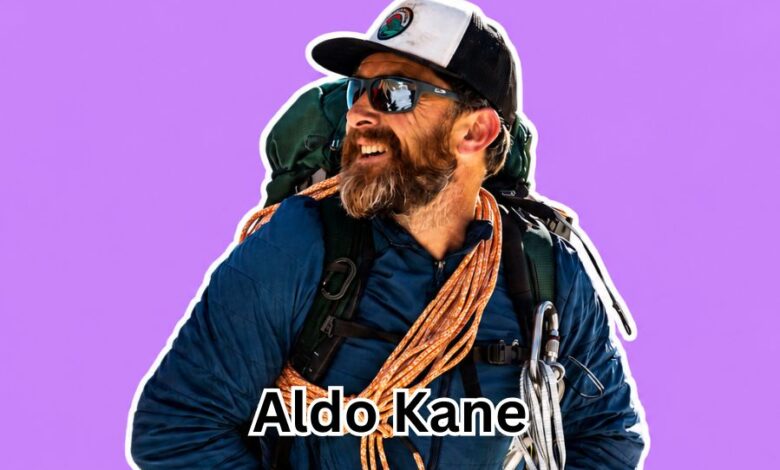
Introduction
Aldo Kane is a Scottish adventurer, former Royal Marines Commando sniper, television presenter, author and specialist in managing danger in some of the world’s most challenging environments. While many viewers recognise him from major adventure documentaries, much of his professional reputation was established behind the camera, where he helped production teams operate safely in remote jungles, active volcanic regions, high mountains, oceans and other unpredictable locations.
His career is not simply a story of chasing danger for entertainment. Kane has built his work around preparation, calculated risk, leadership and disciplined decision-making. His military training gave him the practical skills required to survive difficult conditions. Still, his success in television has also depended on communication, adaptability and the ability to remain calm while other people rely on his judgement.
From joining the Royal Marines as a teenager to climbing the world’s highest mountains, crossing the Atlantic and supporting ambitious natural-history productions, Kane has developed into one of Britain’s most distinctive modern explorers. His experiences also provide a wider lesson about rebuilding identity, finding purpose after a major career change and using pressure as a tool for personal growth.
Quick Bio
| Field | Details |
|---|---|
| Full Name | Aldo Kane |
| Profession | Adventurer, television presenter, author and safety consultant |
| Nationality | Scottish |
| Birthplace | Kilwinning, Scotland |
| Known For | Extreme expeditions, survival programmes and risk management |
| Military Background | Former Royal Marines Commando |
| Specialist Role | Sniper and reconnaissance specialist |
| Television Work | OceanXplorers, The Wild Ones and Arctic Ascent |
| Book | Lessons From the Edge |
| Major Achievement | Rowed across the Atlantic and climbed Everest and Lhotse |
Aldo Kane’s Early Path into the Royal Marines
Aldo Kane’s journey towards exploration began unusually early. He joined the Royal Marines at the age of 16 and completed the demanding training required to earn the Green Beret while still a teenager. He later qualified as a sniper and reconnaissance specialist, becoming one of the youngest people to hold such a role in the British armed forces. His training covered navigation, survival, signalling, observation, fieldcraft and operating effectively in unfamiliar environments.
The importance of this period goes beyond physical fitness or weapons training. The Royal Marines taught Kane how to break large, intimidating problems into smaller decisions. In an extreme environment, success often depends on completing ordinary tasks correctly: checking equipment, reading weather conditions, controlling energy, communicating clearly and recognising danger before it becomes unmanageable.
Kane served for approximately ten years, gaining experience in different climates and operational settings, including the Middle East. This exposure helped him become comfortable working in jungles, deserts, mountains and cold environments. More importantly, it taught him that confidence must be supported by preparation. Acting bravely without understanding the risks can endanger an entire team, whereas disciplined courage allows people to move forward without ignoring reality.
Leaving Military Life and Finding a New Identity
The transition from military service to civilian employment was not immediately straightforward. Kane had spent much of his youth inside a highly structured organisation where responsibilities, standards and relationships were clearly defined. Leaving that environment meant losing not only a profession but also a powerful sense of belonging and identity.
This part of his story is significant because it makes his later achievements more relatable. Kane did not move instantly from military success into a perfect television career. He has described periods of uncertainty in which he had to reconsider what his skills were worth outside the armed forces. His debut book later explored feelings of disconnection, failure and the challenge of rebuilding purpose after important doors appeared to close.
The abilities developed in the Royal Marines eventually gave him a direction. Television and film companies regularly send crews into places where standard production procedures are not enough. A crew filming beside an active volcano, crossing an isolated mountain range or travelling through politically unstable territory needs more than cameras and creative ideas. It needs detailed risk assessments, emergency plans, safe routes, specialist equipment and someone capable of making difficult decisions under pressure.
How Aldo Kane Became a Television Safety Expert
Kane moved into the television industry as a technical safety consultant and expedition specialist. Instead of immediately seeking attention on screen, he established himself as the person responsible for helping other presenters, camera operators, scientists and producers complete difficult assignments safely.
Through his company, Vertical Planet, he has provided safety consultation, logistical planning and risk-management support for film and television projects working in hostile or remote environments. This work can include testing routes, checking rope systems, planning evacuations, assessing medical risks and deciding whether changing conditions make a planned activity unacceptable.
His professional value comes from balancing two competing priorities. Producers want compelling footage and access to extraordinary places, while safety teams must protect everyone involved. Kane’s role is not to eliminate every risk, which would make many expeditions impossible, but to identify which risks can be controlled and which should not be taken.
He has worked with major broadcasters and production companies, including the BBC, National Geographic, Discovery, Channel 4, Disney, Netflix and Apple TV. He has also supported projects involving well-known actors and presenters, including Will Smith, Tom Hardy, Henry Cavill and Adrien Brody.
Aldo Kane’s Rise as an On-Screen Adventurer
Moving from Behind the Camera to the Foreground
After years of helping other people operate in extreme locations, Kane gradually became a recognisable on-screen figure. His knowledge was particularly suitable for factual television because he could explain danger without making it appear glamorous or artificial. Viewers could see that his decisions were based on real experience rather than a television persona.
He became associated with productions such as One Strange Rock, the National Geographic natural-history series hosted by Will Smith. He also contributed specialist rope and expedition expertise to Welcome to Earth, another ambitious series involving journeys into unusual landscapes and natural environments.
Kane later appeared as the survival expert on Channel 4’s The Bridge: Race to a Fortune, a programme in which contestants faced practical and psychological challenges while attempting to construct a bridge. His presence helped connect the entertainment format with genuine expedition knowledge, particularly when participants were working under fatigue, uncertainty and time pressure.
Arctic Ascent, OceanXplorers and The Wild Ones
In Arctic Ascent with Alex Honnold, Kane served as expedition safety and logistics lead. The production followed a difficult climbing mission in Greenland and combined mountaineering with scientific investigation. His responsibility was not merely to participate but to help the team function safely in an Arctic environment where cold, isolation and limited rescue options could magnify even a minor error.
Kane also appeared in OceanXplorers, a six-part National Geographic production developed with James Cameron. The series used advanced research vessels, scientific equipment, submersibles and diving operations to study marine animals and ocean ecosystems. The project suited Kane’s combination of military experience, nautical ability, expedition planning and interest in environmental storytelling.
In 2025, he became a central expedition figure in The Wild Ones, a series following experts searching for rare and endangered animals in remote parts of the world. The programme combined wildlife conservation, tracking, specialist filming and survival skills, showing how modern exploration can contribute to scientific understanding rather than simply attempting to conquer difficult landscapes.
Major Expeditions and World-Record Achievements
One of Kane’s most notable accomplishments came in March 2016, when he was part of the first team to row from mainland Europe to South America. The journey covered approximately 3,840 miles across the Atlantic. Ocean rowing demands constant physical effort, careful rationing, equipment maintenance and an ability to remain effective during long periods of exhaustion and discomfort.
Kane has also worked around active volcanoes and descended by rope into an erupting volcanic environment in the Democratic Republic of Congo. Such assignments involve toxic gases, unstable ground, extreme heat and limited opportunities for rescue. His presence on these productions reflects why practical safety experience is essential when filmmakers attempt to document natural events that cannot be controlled.
In May 2023, Kane completed a major high-altitude achievement by climbing Mount Everest and Lhotse, the world’s highest and fourth-highest mountains. Attempting the two summits requires exceptional physical preparation and careful management of altitude, weather, oxygen, fatigue and limited recovery time.
He continued testing his endurance in March 2025 by completing the 500-kilometre Lapland Arctic Ultra. The challenge took participants through snow, ice, darkness and severe cold. In an Arctic endurance event, the ability to manage body temperature, food, sleep, equipment and mental fatigue is as important as speed. Kane’s completion of the event demonstrated that his expedition career was still evolving rather than depending only on achievements from his earlier years.
Lessons From the Edge and His Work as an Author
Kane’s book, Lessons From the Edge: Inspirational Tales of Surviving, Thriving and Extreme Adventure, brings together stories from military service, expeditions and television assignments. However, it is not presented only as a collection of dramatic survival stories. Its central themes include managing fear, recovering from failure, making clear decisions and taking responsibility for the direction of one’s life.
The book examines how Kane dealt with uncertainty after leaving the Royal Marines and how he gradually created a new professional identity. It argues that resilience is not the absence of doubt or emotion. Instead, it is the ability to acknowledge pressure, understand the situation and continue taking useful action.
This message explains why his work appeals to people who may have no interest in climbing mountains or crossing oceans. A demanding workplace, a career setback or a major personal change can create the same basic questions found on an expedition: What can be controlled? What information is missing? Which decision must be made first? Kane’s experiences offer an extreme but understandable framework for answering those questions.
Aldo Kane’s Approach to Leadership and Resilience
A major theme throughout Kane’s career is that effective leadership begins before a crisis occurs. A leader cannot wait until conditions deteriorate before deciding how a team should communicate or respond. Equipment, responsibilities, emergency procedures and decision-making authority must be understood in advance.
He now applies these lessons through speaking, coaching and leadership development. His programmes focus on resilience, stress management, decision-making, character and performance in uncertain situations. Rather than presenting confidence as something people either possess or lack, his approach treats it as a result of preparation, repeated experience and honest evaluation.
Kane has also spoken publicly about the emotional effects of military service and the importance of dealing with difficult experiences rather than hiding them. This openness challenges the idea that physical toughness requires emotional silence. His example suggests that sustainable resilience includes reflection, recovery and a willingness to seek appropriate support when intense experiences begin to affect everyday life.
What Makes Aldo Kane Different from Other Television Adventurers?
Kane’s credibility comes from the fact that his television career developed from operational responsibility. He was trusted with the safety of crews before he became widely known as a presenter. Consequently, the tension in his programmes often comes from real environmental challenges rather than exaggerated performance.
He also represents a modern form of exploration. Traditional explorers were frequently celebrated for reaching a summit, crossing a landscape or entering an unknown region. Kane’s television projects increasingly connect exploration with conservation, climate awareness, scientific research and public education. In a National Geographic interview, he explained that he tries to ensure his work tells a wider story about environmental and climatic change.
This balance of adventure and responsibility is central to his appeal. He demonstrates that courage is not about ignoring fear, while safety is not about refusing to take meaningful risks. The objective is to understand the danger, prepare properly and make decisions that serve the team and the purpose of the expedition.
Conclusion
Aldo Kane has created an extraordinary career by transforming military training into a wider mission involving exploration, television, environmental storytelling and leadership. His time as a Royal Marines Commando sniper gave him a foundation in survival and disciplined decision-making. Still, his achievements after leaving the forces required him to adapt those abilities to an entirely different world.
From managing safety on ambitious productions to rowing across the Atlantic, climbing Everest and Lhotse, completing a 500-kilometre Arctic challenge and helping document endangered wildlife, Kane has repeatedly demonstrated the value of preparation under pressure. His story is powerful because it includes uncertainty as well as success. He had to rebuild his identity, discover where his experience could be useful and learn how to communicate those lessons to others.
Ultimately, Kane’s career shows that genuine resilience is not reckless toughness. It is the ability to remain clear-headed, responsible and adaptable when circumstances become difficult. Whether he is leading a television crew, crossing an ocean or explaining how people can respond to personal setbacks, his central message remains consistent: fear can be managed, pressure can be understood, and difficult environments can reveal strengths that ordinary circumstances leave undiscovered.
(FAQs)
Who is Aldo Kane and why is he famous?
Aldo Kane is a Scottish adventurer, former Royal Marines Commando, television presenter, author and expedition safety expert. He is famous for participating in extreme expeditions and helping television crews operate safely in dangerous environments.
Was Aldo Kane really a Royal Marine?
Yes, Aldo Kane joined the Royal Marines at the age of 16 and completed the demanding Commando training. He later qualified as a sniper and reconnaissance specialist before leaving military service after approximately ten years.
Which television programmes feature Aldo Kane?
Aldo Kane has appeared in and worked on several major productions, including One Strange Rock, Welcome to Earth, Arctic Ascent with Alex Honnold, OceanXplorers, The Bridge: Race to a Fortune and The Wild Ones.
What major expeditions has Aldo Kane completed?
His major achievements include rowing across the Atlantic from Europe to South America, climbing Mount Everest and Lhotse, operating near active volcanoes and completing the challenging 500-kilometre Lapland Arctic Ultra.
What is Aldo Kane’s book about?
His book, Lessons From the Edge, shares stories from his military career, television assignments and extreme expeditions. It explores resilience, fear, leadership, failure, personal growth and making effective decisions under pressure.
What does Aldo Kane do now?
Aldo Kane continues to work as an adventurer, television personality, expedition specialist, speaker and leadership coach. He also supports productions that focus on wildlife, conservation, scientific research and environmental exploration.
Why is Aldo Kane considered a survival expert?
He is considered a survival expert because of his Royal Marines training, expedition experience and extensive work in jungles, mountains, oceans, Arctic regions and other hostile environments. His expertise focuses on preparation, risk management and calm decision-making.