Cathal Deasy: The Powerful Dealmaker Driving Barclays’ Global Investment Banking Ambition
From University College Cork to Barclays’ global leadership, Cathal Deasy’s career reflects strategic vision, M&A expertise, and growing influence in modern investment banking.

Introduction
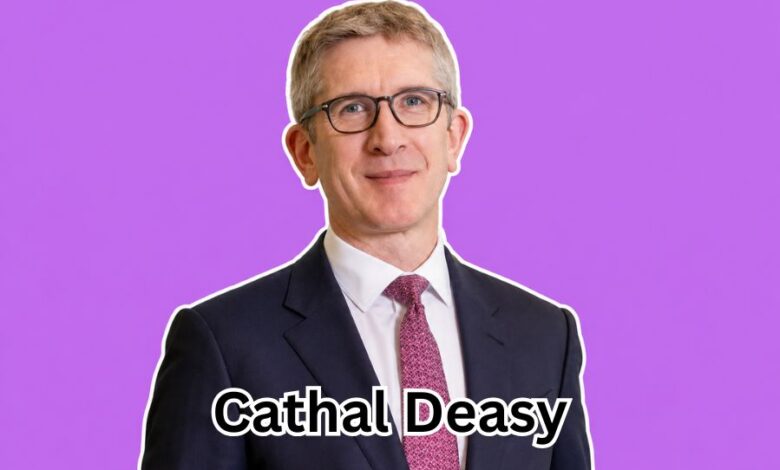
Cathal Deasy has become one of the most closely watched Irish executives in international investment banking. As Global Co-Head of Investment Banking at Barclays, he operates near the center of major corporate transactions, capital-raising decisions and strategic discussions involving some of the world’s largest companies. His career has been shaped by mergers and acquisitions, senior client relationships and the difficult task of building competitive banking franchises across major financial markets.
Deasy’s story is not simply about reaching a prestigious title. It is also about working through institutional change, uncertain economic cycles and intense competition between global banks. He built much of his reputation at Credit Suisse, where he handled important client relationships and rose to senior M&A leadership, before joining Barclays in 2023. Since then, he has helped lead a renewed effort to strengthen the British bank’s advisory, equity capital markets and broader investment banking capabilities, reinforcing the strategic importance of his role.
Quick Bio
| Field | Details |
|---|---|
| Full Name | Cathal Deasy |
| Known For | Senior investment banking leadership |
| Current Position | Global Co-Head of Investment Banking at Barclays |
| Executive Role | Member of the Barclays Group Executive Committee |
| Nationality | Irish |
| Education | University College Cork |
| Professional Field | Investment banking and corporate finance |
| Key Expertise | Mergers and acquisitions, advisory and capital markets |
| Previous Institutions | Merrill Lynch, Deutsche Bank and Credit Suisse |
| Career Highlight | Former Global Co-Head of Mergers and Acquisitions at Credit Suisse |
Cathal Deasy’s Irish Background and Education
Cathal Deasy is closely associated with Cork, Ireland, and studied at University College Cork. Public executive biographies identify him as completing commerce and business studies there, giving him an academic foundation in financial analysis, commercial judgment and corporate decision-making.
Detailed information about his childhood and private family life is not widely available, and his public profile remains firmly focused on his professional career. That restraint is appropriate for an executive whose influence comes from corporate leadership rather than celebrity. His rise also shows that academic qualifications are only the beginning in investment banking. Long-term advancement depends on client trust, judgment under pressure, internal leadership and the ability to deliver complex transactions.
Building Experience at Major Global Banks
Early Career and Deutsche Bank
Before becoming a senior figure at Credit Suisse and Barclays, Cathal Deasy gained experience at established international banking institutions. His career included work at Merrill Lynch, followed by approximately nine years at Deutsche Bank. These roles exposed him to the demanding culture of global investment banking, where professionals must understand industries, value companies, manage negotiations and coordinate teams across several jurisdictions.
His years at Deutsche Bank helped establish the experience required for high-level advisory work. Senior investment bankers advise chief executives, boards and major shareholders on decisions that can reshape companies. Such assignments may involve acquisitions, disposals, mergers, activist investors, restructurings or access to capital markets. By the time Deasy moved into broader leadership, he had developed a reputation for combining technical deal knowledge with strong relationship management. That experience set up his rise at Credit Suisse.
Rising Through Credit Suisse
Cathal Deasy’s profile grew substantially at Credit Suisse. He became a senior figure in the bank’s European investment banking business and was trusted with major client relationships. After serving as head of mergers and acquisitions for Europe, the Middle East and Africa, he was promoted in 2021 to Global Co-Head of Mergers and Acquisitions alongside Steven Geller.
That appointment placed him in charge of a core business within a leading international bank. M&A leadership involves more than supervising transactions. It requires setting priorities, retaining talented bankers, supporting regional teams, and ensuring that the institution is considered for the largest corporate assignments. Reported transactions linked with the leadership team included the combination of DuPont’s nutrition and biosciences business with International Flavors & Fragrances, as well as FIS’s acquisition of Worldpay.
Deasy was also associated with advice to British energy company SSE during its response to pressure from activist investor Elliott Management. Situations of this kind require discretion, strategic clarity and the ability to help company leadership assess competing financial and operational arguments.
His final period at Credit Suisse came during significant instability at the Swiss bank. After moving into a broader regional investment banking and capital markets leadership role, he left in early 2023. His move to Barclays therefore represented both a major promotion and an opportunity for the British bank to recruit an experienced dealmaker during a period of disruption across European finance. It also marked the beginning of a new phase in his career.
Why Barclays Recruited Cathal Deasy
Barclays announced in January 2023 that Cathal Deasy would become Co-Head of Investment Banking alongside Taylor Wright. The appointment took effect in March and formed part of an effort to develop the bank’s next generation of leadership. Deasy brought deep European advisory experience, while Wright brought extensive capital markets knowledge and a strong background in the United States. Barclays’ rationale was to combine those strengths and support a more coordinated client offering.
Their partnership combined two important sides of investment banking. Advisory teams guide companies through mergers, acquisitions and strategic decisions, while capital markets teams help clients raise money through shares, bonds and other instruments. Bringing these capabilities together under joint leadership supported Barclays’ aim to provide clients with a more coordinated service. For that reason, the appointment fit Barclays’ wider plan.
For Deasy, the move offered a platform with genuine global scale. Barclays has long been strong in fixed-income trading and debt underwriting, but it has also sought to improve its position in M&A advice and equity capital markets. His task was therefore not merely to maintain an established business. It was to help build market share, sharpen sector coverage and strengthen relationships with chief executives, boards, financial sponsors and institutional investors. In that context, Barclays recruited him to support growth in the areas where the bank wanted to deepen its franchise.
Cathal Deasy’s Role in Barclays’ Growth Strategy
Expanding Advisory and Equity Capital Markets
One of the clearest priorities under Cathal Deasy and Taylor Wright has been improving Barclays’ performance in advisory and equity underwriting. In a 2024 presentation, the bank highlighted gains in its share of global equity underwriting fees and M&A advisory work. Deasy said Barclays had increased its equity underwriting fee share from 2.1 percent to 3.6 percent, while its advisory share also moved higher.
These figures mattered because they offered evidence that the strategy was producing measurable progress. Barclays already had a strong debt capital markets business, but becoming a more balanced investment bank required better performance in areas where relationships and senior-level advice often determine which institution receives the leading role. That context explains why the next steps in the strategy mattered.
The bank reorganized parts of its sector coverage and invested in technology, healthcare, industrials and energy transition. These sectors can generate major transactions, substantial financing requirements and long-term client opportunities. Deasy’s M&A background made him well suited to a strategy focused on winning complex assignments rather than relying only on trading or balance-sheet strength.
Strengthening the Senior Banking Team
Barclays has also made senior appointments to expand its franchise. In 2025, the bank recruited Andrew Woeber to lead global mergers and acquisitions and hired Marc Warm as a global co-head of capital markets. Both appointments strengthened businesses directly connected to the strategy overseen by Deasy and Wright.
Hiring prominent bankers is only one part of the challenge. Leadership must integrate new recruits, establish clear responsibilities and ensure that regional and product teams cooperate effectively. Deasy’s position on the Barclays Group Executive Committee gives him influence beyond individual deals. It places him within the senior management structure responsible for implementing the bank’s broader strategy, culture and financial priorities. That role connects team growth with execution.
Leadership Style and Professional Influence
Cathal Deasy is not a highly public celebrity executive, and he does not appear to build his reputation through constant media exposure. His influence is more closely connected to execution, client access and institutional leadership, which makes him a strong example of the article’s central theme. This reflects the traditional profile of a senior investment banker whose most important work often takes place in private meetings with corporate boards and executive teams.
The available record suggests an approach based on relationship-driven banking, sector expertise and disciplined strategic expansion. His career progression also indicates an ability to take responsibility during difficult periods. At Credit Suisse, he advanced while the institution was managing departures and reputational challenges. At Barclays, he was asked to help improve performance in businesses where the bank believed it had room to grow.
Investment banking results, however, are affected by interest rates, regulation, geopolitical uncertainty and the willingness of companies to pursue deals. No executive controls the entire environment. The real test is whether the organization gains market share, retains strong people and remains trusted by clients across different cycles.
The Wider Significance of His Career
Cathal Deasy’s career illustrates how modern investment banking has evolved and why his role matters. The industry still values technical deal-making skill, but senior leaders must now manage a wider range of issues, including sustainability, energy transition, private capital, regulation and activist shareholders. Banks are also under pressure to improve returns while controlling costs and risk, making his career a useful example of the demands on global investment banking leadership.
His experience across Deutsche Bank, Credit Suisse and Barclays gives him a broad view of these demands. He has worked within German, Swiss and British banking environments, each with different strengths and strategic challenges. That international background is valuable when advising companies whose operations, shareholders and financing needs cross national borders.
His progress may also interest readers in Ireland because it demonstrates the global reach of Irish business talent. From University College Cork to a place on Barclays’ senior executive committee, his rise reflects professional consistency rather than overnight recognition. It is a career built over decades through transactions, client relationships and increasingly demanding leadership roles.
Conclusion
Cathal Deasy has established himself as a significant figure in global investment banking through a career centered on mergers and acquisitions, trusted corporate advice and senior institutional leadership. His experience at Deutsche Bank and Credit Suisse prepared him for his current position as Global Co-Head of Investment Banking at Barclays, where he works alongside Taylor Wright to strengthen the bank’s advisory, capital markets and sector capabilities.
His impact is best understood through the responsibilities he now carries. He is helping Barclays compete for major global transactions, recruit experienced bankers and improve its position in areas targeted for growth. His place on the Group Executive Committee also connects his investment banking role to the wider direction of one of Britain’s largest financial institutions.
Deasy’s career is therefore more than a story of personal advancement. It shows how credibility is built in high-level finance: through long-term performance, sound judgment, strong client relationships and the ability to lead during uncertain market conditions. As Barclays continues to expand its investment banking franchise, Cathal Deasy will remain one of the executives most closely associated with that ambition and its eventual success.
(FAQs)
Who Is Cathal Deasy in Investment Banking?
Cathal Deasy is a senior Irish investment banker who serves as Global Co-Head of Investment Banking at Barclays. He is known for his experience in mergers and acquisitions, corporate advisory services, capital markets, and international banking leadership.
What Is Cathal Deasy’s Current Barclays Role?
Cathal Deasy is the Global Co-Head of Investment Banking at Barclays, working alongside Taylor Wright. He helps oversee the bank’s global advisory, capital-raising and investment banking operations while also serving on the Barclays Group Executive Committee.
Where Did Cathal Deasy Study Business?
Cathal Deasy studied at University College Cork in Ireland, where he completed commerce and business studies. His education gave him a strong foundation in business analysis, financial decision-making and commercial strategy before he entered investment banking.
Which Banks Has Cathal Deasy Worked For?
During his career, Cathal Deasy has worked for several major financial institutions, including Merrill Lynch, Deutsche Bank, Credit Suisse and Barclays. These positions allowed him to develop extensive experience across European and global financial markets.
Why Is Cathal Deasy Considered Influential?
Cathal Deasy is considered influential because he has advised major corporations, led international M&A teams and helped shape investment banking strategies at globally recognized institutions. His expertise in corporate transactions and client relationships has supported his rise to senior leadership.
When Did Cathal Deasy Join Barclays?
Cathal Deasy’s appointment at Barclays was announced in January 2023, and he officially joined the bank in March of that year. He was appointed to lead the investment banking division alongside Taylor Wright as part of Barclays’ long-term growth strategy.
What Was Cathal Deasy’s Credit Suisse Position?
At Credit Suisse, Cathal Deasy held several senior responsibilities, including Global Co-Head of Mergers and Acquisitions. He also managed important European investment banking activities and advised corporate clients on major transactions and strategic business decisions.